Band Straight-Arm Pulldown
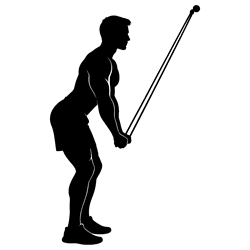
A lat isolation exercise with a band anchored overhead: keeping your arms straight, you sweep your hands down in an arc from head height to your thighs.
- Primary muscles
- Lats
- Difficulty
- Beginner
- Logged as
- Band × reps
Loads from YouTube only when you press play. The video is by an independent creator.
Why do it
With your elbows straight, your biceps can't help, so this is a direct way to feel your lats working. It's handy as a warm-up before pull-ups or rows, or as a high-rep finisher at home. Compared to the cable version, the band is light at the top and heaviest at your thighs, so squeeze hard at the bottom and control the way back up. Progress with a stronger band once you can do clean sets of high reps.
How to do it
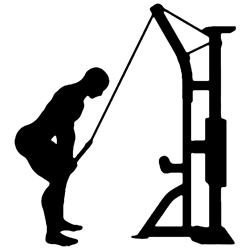
Anchor a band overhead and hold one end in each hand in front of you at about head height, arms straight. Step back and hinge slightly forward at the hips.
Pull your hands down in an arc to your thighs, keeping your arms straight.
Squeeze your lats at the bottom and keep your shoulders down.
Let your hands rise slowly back to head height. Log the band you used; a stronger band counts as progress.
Common mistakes
Bending your elbows
Once your elbows bend, it turns into a pulldown and your arms take over. Keep them straight from start to finish, with only a soft lock.
Standing too upright
A slight forward hinge lets your arms travel through a longer arc. Standing tall shortens the movement and leaves the band slack at the top.
Rounding your shoulders at the bottom
Keep your shoulders down and back as your hands reach your thighs. Letting them roll forward takes away the lat squeeze at the end.
Letting the band whip your arms up
Raise your hands slowly back to head height. A fast return skips the part of the rep where your lats lengthen under tension.
Sets, reps and progression
How many sets you do and how close to failure you take them depend on your goal and your week, not on the exercise. These guides cover it:
Alternatives that train the same thing
Same movement, a different angle or piece of equipment.