
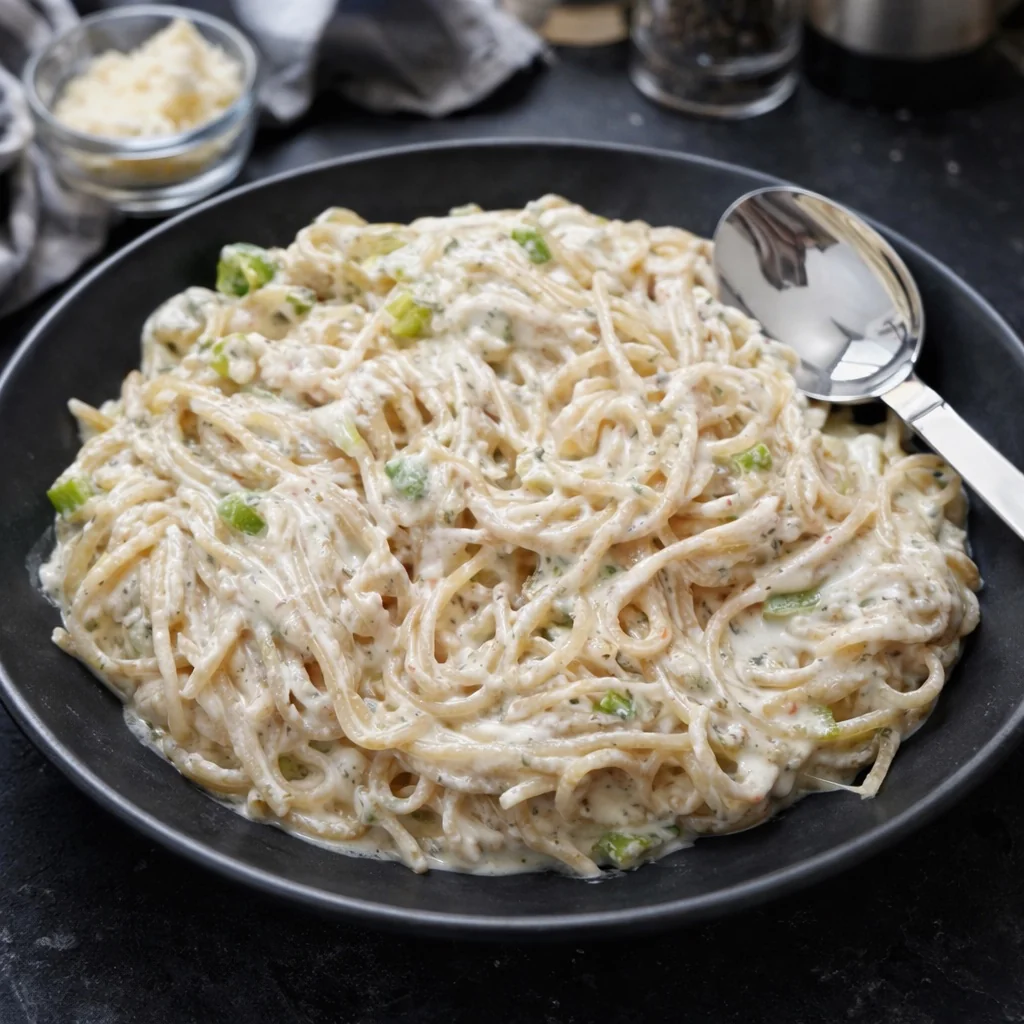
Creamy Cheese Pasta
A 20-minute single-serving spaghetti with a Greek yogurt and mozzarella sauce, fried garlic, and dried Italian herbs.
Servings
1
Prep
5 min
Cook
15 min
Total
20 min
Ingredients
- 100 g spaghetti (dry)
- 2 (6 g) garlic cloves (minced)
- 1 tbsp (13.5 g) olive oil
- 140 g whole Greek yogurt
- 40 g part-skim mozzarella (shredded)
- 1 tsp (1.3 g) dried Italian herbs
- 1 pinch (0.5 g) salt
- 1 pinch (0.5 g) black pepper
- 2 (30 g) spring onions (green parts sliced)
Equipment
- Medium saucepan
- Colander
- Large frying pan
- Knife and cutting board
- Kitchen scale
Method
Cook the spaghetti
Bring a pot of salted water to a boil and cook the spaghetti until al dente, following the time on the packet. Keep a few tablespoons of the cooking water before you drain it.
Prepare the garlic and spring onions
While the pasta cooks, mince the garlic and slice the green parts of the spring onions for the topping.
Fry the garlic
Warm the olive oil in a large pan over medium heat and add the garlic. Fry for about two minutes, until it turns light golden. Take it further than pale but stop before it browns, since burnt garlic turns bitter.
Make the sauce
Reduce the heat to its lowest setting. Stir in the Greek yogurt and the shredded mozzarella and keep stirring until the cheese has melted into a smooth sauce.
Season the sauce
Stir in the Italian herbs, salt, and black pepper. Taste and adjust before the pasta goes in.
Combine and serve
Add the drained spaghetti to the pan and toss until every strand is coated, loosening the sauce with the reserved pasta water if it looks tight. Plate it and scatter the spring onions over the top.
Nutrition
Per serving (the whole recipe), calculated from the listed ingredient quantities
Calories
761
Protein
35.7 g
Carbs
88.3 g
Fat
29.4 g
Fiber
5.3 g
Pasta at a glance
This makes one serving in 20 minutes. It provides 761 calories, 35.7 g protein, 88.3 g carbohydrates, 29.4 g fat, and 5.3 g fiber, calculated from the listed ingredient quantities.
The protein comes from the pasta, the Greek yogurt, and the mozzarella rather than from meat, so the dish works as a vegetarian main.
Keeping the yogurt sauce smooth
Yogurt splits if you heat it too fast. Take the pan down to its lowest setting before the yogurt goes in, and stir constantly until the mozzarella has melted through it. If the sauce does look grainy, pull the pan off the heat and keep stirring; it usually comes back together.
Whole Greek yogurt is more stable than a low-fat one because the extra fat protects the proteins. If you only have low-fat yogurt, take the pan off the heat entirely and let the residual warmth melt the cheese.
Keep a few tablespoons of the pasta cooking water. Stirring it in loosens a sauce that has tightened up, and the starch helps it cling to the spaghetti.
Adjusting the portion
At 761 calories this is a full meal rather than a side. To bring it down, drop the pasta to 75 g and the olive oil to 2 teaspoons, which removes about 130 calories. To turn it into two smaller servings, cook 150 g of pasta and increase the yogurt to 200 g.
Serving and storage
Serve it immediately; a yogurt sauce is at its best straight from the pan. Refrigerate leftovers within two hours and use them within three to four days. Reheat gently over low heat with a splash of milk or water, since a hard reheat will split the sauce.
Storage
Refrigerate leftovers in a covered container within two hours and use them within three to four days. Reheat gently over low heat with a splash of milk or water so the yogurt sauce does not split.
Allergens
- Contains milk (Greek yogurt, mozzarella) and wheat (pasta)
- Check packaged ingredient labels for allergen and cross-contact information

Ready to evolve your training?
Download GymEvo and keep your workouts, nutrition, and progress in one place.