
Protein Marble Cheesecake
A baked marble cheesecake made from low-fat quark, custard powder, milk, one egg, and cocoa, giving two servings with 39 g protein each.
Servings
2
Prep
5 min
Cook
35 min
Total
40 min
Ingredients
- 500 g low-fat quark
- 200 ml reduced-fat milk (2 percent)
- 37 g dry custard powder (vanilla pudding mix)
- 1 (50 g) egg
- 2 tbsp (10.8 g) unsweetened cocoa powder
Equipment
- Two mixing bowls
- Whisk
- Kitchen scale
- Small square baking dish (about 20 cm)
- Spoon or skewer for swirling
- Oven
Method
Heat the oven
Heat the oven to 180°C (355°F) and grease a small square baking dish.
Mix the batter
Whisk the quark, milk, custard powder, and egg in a bowl until completely smooth with no lumps of custard powder. Add sweetener to taste and whisk it in.
Make the cocoa batter
Pour half of the batter into a second bowl and whisk the cocoa powder into it until the color is even.
Swirl the two batters
Pour the plain batter onto one side of the dish and the cocoa batter onto the other. Drag a spoon handle or skewer through them in two or three long S shapes to marble the surface.
Bake and cool
Bake for 35 minutes, until the edges are set and the center still has a slight wobble. Let the cheesecake cool to room temperature in the dish before slicing it.
Nutrition
Per serving (half of the cheesecake), calculated from the listed ingredient quantities and excluding optional sweetener
Calories
359
Protein
38.8 g
Carbs
33.5 g
Fat
8.7 g
Fiber
1.5 g
Cheesecake at a glance
This makes two servings and takes 40 minutes, 35 of which are baking. Each serving provides 359 calories, 38.8 g protein, 33.5 g carbohydrates, 8.7 g fat, and 1.5 g fiber, calculated from the listed ingredient quantities.
Almost all of the protein comes from the 500 g of quark. Two servings is a generous portion for a dessert; cut it into four if you want it alongside something else.
Sweetening it
Custard powder brings some sugar with it, but the quark does not, so the batter tastes tart on its own. Add sweetener to taste before you split the batter and mix it in fully, since you cannot correct the sweetness once it is baked.
The nutrition above does not include any sweetener. Granulated sweeteners such as erythritol or sucralose add close to nothing; two tablespoons of sugar would add about 100 calories and 25 g of carbohydrates across the whole cheesecake.
Getting a clean marble
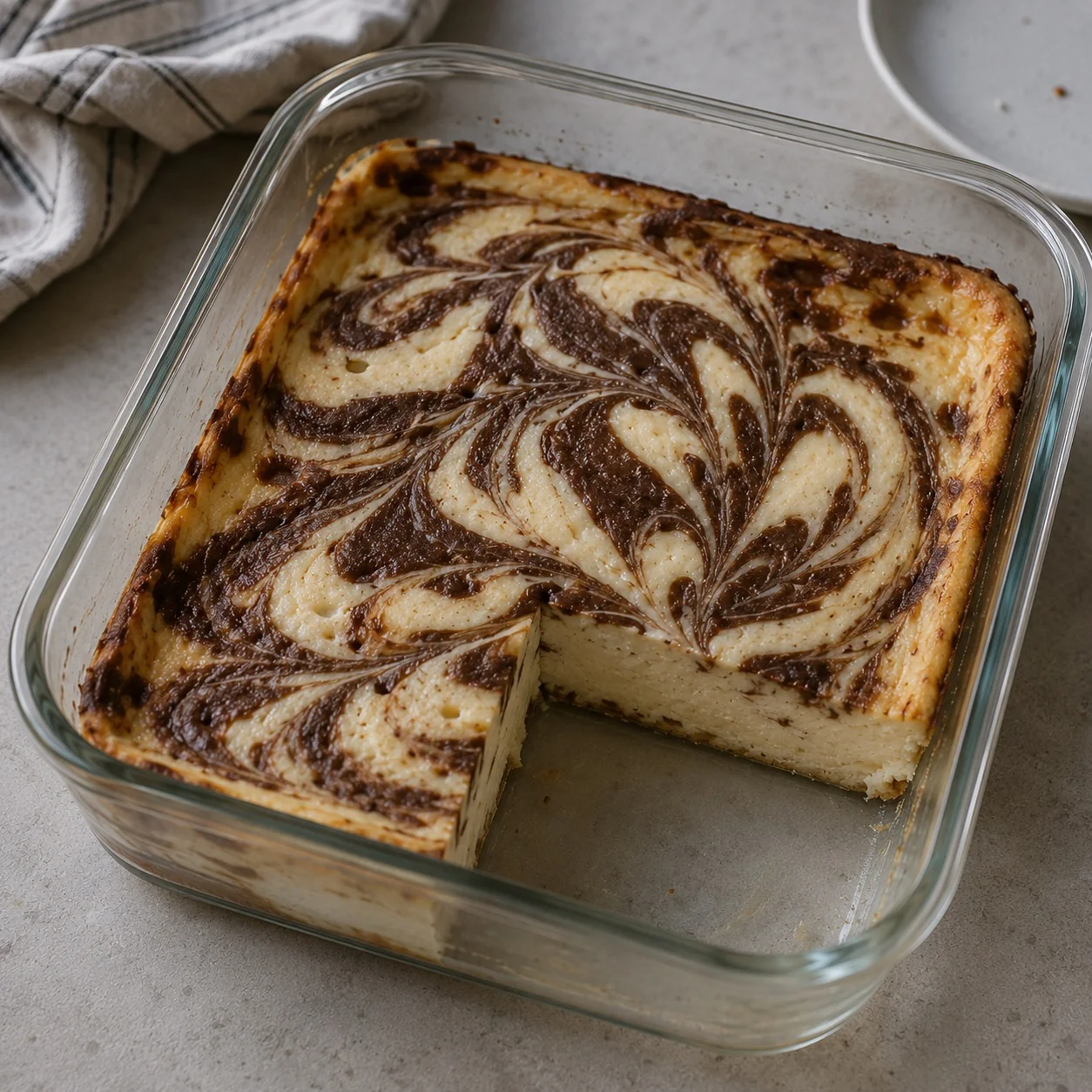
Pour the plain and cocoa batters onto opposite sides of the dish so they meet in the middle, then drag a spoon handle or a skewer through them in a few long S shapes. Two or three passes give a clear pattern. Stirring more than that blends the two batters into a uniform brown.
If you cannot get quark, strained skyr or a thick Greek yogurt behaves similarly in the oven, though a full-fat yogurt will raise the fat content and soften the set.
Serving and storage
The cheesecake is very soft straight from the oven and firms up as it cools, so let it come down to room temperature before slicing. Refrigerate leftovers within two hours and use them within three to four days. It slices most cleanly chilled.
Storage
Refrigerate in a covered container within two hours and use within three to four days. It slices most cleanly straight from the fridge.
Allergens
- Contains milk (quark, milk) and egg
- Custard powder may contain gluten and soy
- Check packaged ingredient labels for allergen and cross-contact information

Ready to evolve your training?
Download GymEvo and keep your workouts, nutrition, and progress in one place.