Band Pallof Press
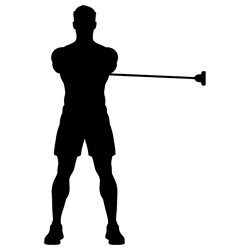
Standing side-on to a band anchored at chest height, you press your hands straight out and hold, resisting the band's pull to twist your torso toward the anchor.
- Primary muscles
- Obliques, Abs
- Difficulty
- Beginner
- Logged as
- Band × reps
Loads from YouTube only when you press play. The video is by an independent creator.
Why do it
The Pallof press trains your core to resist rotation, so you get oblique and ab work without crunching or twisting. The band version needs only a door frame or post to anchor it, which makes it easy to do at home or as part of a warm-up. A band pulls harder the more it stretches, so the twist is strongest with your arms out; step further from the anchor or use a stronger band to progress. With a cable machine, you get a steadier pull and finer weight steps.
How to do it
Anchor a band at chest height beside you and hold its end with both hands against the middle of your chest. Step sideways away from the anchor until the band is taut, feet shoulder-width apart.
Press your hands straight forward until your arms are extended, without letting the band turn your torso.
Hold for a moment with your hips and shoulders facing forward.
Bring your hands back to your chest. Do all reps, then switch sides. Log the band you used; a stronger band counts as progress.
Common mistakes
Letting the band turn you
If your hips or shoulders rotate toward the anchor, the band wins and your core stops resisting. Stand square and brace, and use a lighter band until you can stay completely still.
Standing too close to the anchor
With a slack band, the press is just an arm movement. Step out until the band is taut at your chest, so the twisting pull is there before you start.
Pressing out and straight back in
The hardest moment is with your arms extended, when the band pulls most. Pause there each rep instead of pumping in and out.
Leaning away from the band
Tilting away from the anchor to fight the pull turns it into a side bend. Stay tall with your weight even on both feet.
Sets, reps and progression
How many sets you do and how close to failure you take them depend on your goal and your week, not on the exercise. These guides cover it:
Alternatives that train the same thing
Same movement, a different angle or piece of equipment.