Hanging Leg Raise
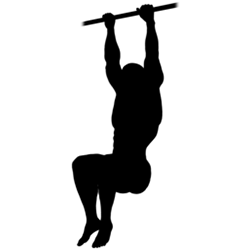
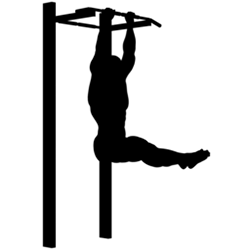
Hanging from a pull-up bar with straight legs, you raise them in front of you to at least parallel, curling your pelvis up at the top to work your lower abs.
- Primary muscles
- Lower abs
- Secondary
- Abs, Obliques
- Difficulty
- Intermediate
- Logged as
- Reps
Loads from YouTube only when you press play. The video is by an independent creator.
Why do it
With straight legs the lever is long, so this is noticeably harder than the knee raise and one of the toughest lower-ab moves you can do with just a bar. It suits lifters with a solid grip and enough hamstring flexibility to keep their legs straight. The goal isn't just getting your feet high; curling your pelvis up at the top is what makes it ab work rather than hip flexor work. If your hamstrings are tight, bend your knees slightly, and once you can go higher, work toward toes to bar.
How to do it
Hang from a pull-up bar with an overhand grip, hands about shoulder-width apart, feet clear of the floor.
Pull your shoulder blades down so you're not hanging passively.
Raise your straight legs in front of you until they're at least parallel to the floor, curling your pelvis up at the top.
Lower them slowly without letting your body swing. If your hamstrings are too tight for straight legs, bend your knees.
Common mistakes
Swinging through the reps
A swinging body lets momentum lift your legs. Pull your shoulder blades down, start each rep from a dead stop and lower slowly.
Lifting without tucking the pelvis
Raising straight legs with a flat lower back works mainly your hip flexors. Curl your pelvis toward your ribs at the top so your abs finish the rep.
Bending the knees when it gets hard
Letting your knees bend halfway up shortens the lever just when the rep gets tough. Pick a leg shape you can keep for every rep, bent or straight.
Leaning back to lift higher
Throwing your shoulders back to get your feet up turns the rep into a seesaw. Keep your torso under the bar and raise only as high as your abs can take you.
Sets, reps and progression
How many sets you do and how close to failure you take them depend on your goal and your week, not on the exercise. These guides cover it:
Alternatives that train the same thing
Same movement, a different angle or piece of equipment.