Bicycle Crunch
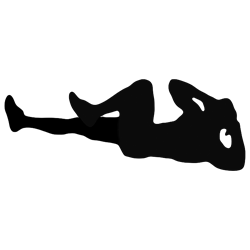
Lying on your back, you pedal your legs while rotating to bring each shoulder toward the opposite knee, combining a crunch, a twist and alternating leg work.
- Primary muscles
- Obliques, Abs
- Secondary
- Lower abs
- Difficulty
- Beginner
- Logged as
- Reps
Loads from YouTube only when you press play. The video is by an independent creator.
Why do it
The bicycle crunch combines a crunch, a twist and moving legs in one rep, so your obliques and abs work together and it doubles as a light conditioning move in circuits. It suits beginners as long as they keep the pace slow. Compared with heel touches or Russian twists, you're both curling and rotating while your lower abs hold the legs up, which makes it more demanding but also easy to cheat with flapping elbows. Extend the straight leg lower to make it harder, higher to make it easier.
How to do it
Lie on your back with your hands resting lightly behind your head and your knees bent up over your hips.
Extend your right leg out straight while pulling your left knee toward your chest.
Rotate your torso to bring your right shoulder toward your left knee.
Switch sides and keep alternating. Turn from your ribs rather than pulling your head forward with your hands.
Common mistakes
Pulling on your head
Yanking your neck forward with your hands makes the rep look bigger while your abs do less. Rest your fingertips lightly behind your head and lift from your upper back.
Moving only your elbows
Flicking the elbow toward the knee without turning your torso skips the oblique work. Rotate your ribs so the shoulder leads; the elbow just follows.
Pedaling too fast
Fast reps turn into a flailing rhythm. Slow down and pause briefly each time your shoulder and knee meet.
Lower back arching off the floor
If the extended leg drops too low, your lower back lifts and your abs lose the position. Keep the straight leg higher until you can hold your back flat.
Sets, reps and progression
How many sets you do and how close to failure you take them depend on your goal and your week, not on the exercise. These guides cover it:
Alternatives that train the same thing
Same movement, a different angle or piece of equipment.