Calf Raise on the Leg Press
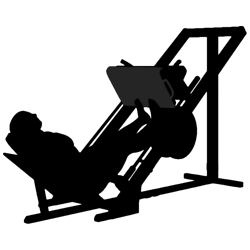
A calf raise done in the leg press: with the balls of your feet on the lower edge of the platform and your legs nearly straight, you push the sled with your ankles alone, working your calves.
- Primary muscles
- Calves
- Difficulty
- Beginner
- Logged as
- Weight × reps
Loads from YouTube only when you press play. The video is by an independent creator.
Why do it
This is a common way to train calves heavily without a dedicated calf machine, and the seat supports your back so only your calves have to work. Your legs stay nearly straight, so it trains the whole calf rather than mainly the soleus, as seated raises do. Compared with hack squat calf raises, the load presses into your feet instead of resting on your shoulders, which many people find more comfortable for heavy sets.
How to do it
Sit in the leg press and place just the balls of your feet on the lower part of the platform, hip-width apart, heels hanging off.
Release the safety levers and straighten your legs, keeping a slight bend in your knees.
Let your heels drop toward the floor until you feel a stretch in your calves.
Push through the balls of your feet to raise your heels as high as they go, then lower slowly. Keep your knees still; this is an ankle movement, not a press.
Common mistakes
Pressing with your knees
If your knees bend and straighten, your quads start moving the sled. Lock in a slight bend and keep it; this is an ankle movement, not a press.
Feet creeping off the edge
Only the balls of your feet are on the platform, and they can slide as you tire. Set them firmly near the lower edge and reset between sets if they move.
Skipping the stretch
Stopping with your heels level with your toes leaves out the bottom. Let your heels drop until you feel a clear stretch in your calves.
Short, fast pulses
Quick little reps move the sled with momentum. Take each rep from full stretch to full height at a steady pace.
Sets, reps and progression
How many sets you do and how close to failure you take them depend on your goal and your week, not on the exercise. These guides cover it:
Alternatives that train the same thing
Same movement, a different angle or piece of equipment.