Standing Calf Raise
Standing tall with the balls of your feet on a raised edge, you drop your heels into a stretch and rise onto your toes, training both calves with straight knees.
Equipment
- Primary muscles
- Calves
- Difficulty
- Beginner
- Logged as
- Weight × reps
- Primary muscles
- Calves
- Difficulty
- Beginner
- Logged as
- Weight × reps
- Primary muscles
- Calves
- Difficulty
- Intermediate
- Logged as
- Weight × reps
- Primary muscles
- Calves
- Difficulty
- Beginner
- Logged as
- Weight × reps
- Primary muscles
- Calves
- Difficulty
- Beginner
- Logged as
- Reps
Loads from YouTube only when you press play. The video is by an independent creator.
Why do it
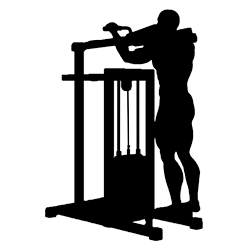
This is the standard straight-knee calf exercise, so it puts more of the work on the gastrocnemius, the larger calf muscle you see from behind, than seated raises do. The standing calf machine is the most stable and the easiest to load heavy. The Smith machine is a good stand-in if your gym has no calf machine, dumbbells and bodyweight suit home training, and the barbell version is the hardest to balance, so keep the weight moderate there.
How to do it (Machine)
Set the shoulder pads to your height and step onto the platform with the balls of your feet, heels hanging off.
Stand tall under the pads with your feet shoulder-width apart and your knees almost straight.
Push through the balls of your feet to raise your heels as high as they go and hold the top briefly.
Lower them below the platform for a full stretch. Straight knees keep the work on the gastrocnemius; bend them and you're doing a seated calf raise standing up.
Hold a dumbbell in each hand at your sides and stand with the balls of your feet on a step, heels hanging off.
Let your heels drop below the step until you feel a stretch in your calves.
Push up onto your toes as high as you can and hold the top for a moment.
Lower slowly. Keep your knees straight so the work stays on the gastrocnemius, and use a wall or rail if balance is the limiting factor.
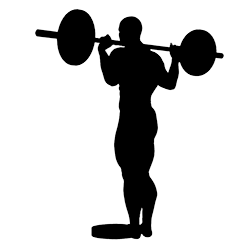
Rack a barbell at shoulder height, step under it so it rests on your upper back and grip it slightly wider than shoulder-width.
Unrack it, step back and place the balls of your feet on a step or plate with your heels hanging off.
Push through the balls of your feet to raise your heels as high as they go.
Lower them below the step for a full stretch. Balancing a loaded bar on a narrow step is the tricky part, so keep the platform stable and the weight moderate.
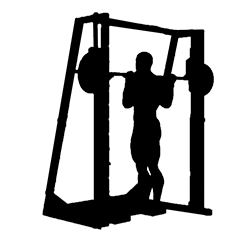
Set the bar at shoulder height and put a platform or plate under it so your heels can drop below your toes.
Step under the bar so it rests on your upper back, place the balls of your feet on the platform and unrack.
Push through the balls of your feet to raise your heels as high as they go and hold the top briefly.
Lower your heels below the platform for a full stretch. Keep your knees almost straight so the work stays on the calves rather than turning into a small squat.
Stand with the balls of your feet on a step or block, heels hanging off. Hold a wall or rail for balance.
Let your heels drop below the step until you feel a stretch in your calves.
Push up onto your toes as high as you can and hold the top for a moment.
Lower slowly. Keep your knees straight; bending them shifts the work to the soleus.
Common mistakes
Turning it into a mini squat
Bending and straightening your knees each rep moves the weight with your thighs. Keep your knees almost straight and let only your ankles move.
Short bounces near the top
Heavy loads tempt people into quick half reps. Lower until your heels are below the edge, then rise as high as you can on every rep.
Leaning forward under the load
Letting your hips bend and your chest drop shortens the range and shifts the weight around. Stand tall with your hips under your shoulders.
Loading the barbell like a machine
A loaded bar on a narrow step is easy to tip off balance. Keep the barbell version moderate and use the machine or Smith machine when you want to go heavy.
Sets, reps and progression
How many sets you do and how close to failure you take them depend on your goal and your week, not on the exercise. These guides cover it:
Alternatives that train the same thing
Same movement, a different angle or piece of equipment.