Curved Treadmill
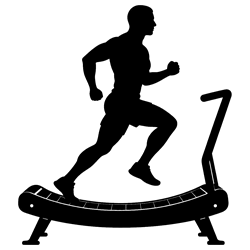
A motorless treadmill with a curved belt that only moves when you push it, so your position on the curve sets the speed.
- Primary muscles
- Quads, Glutes, Hamstrings
- Secondary
- Calves, Abs
- Logged as
- Session: time, plus what the machine shows, such as distance and calories
Loads from YouTube only when you press play. The video is by an independent creator.
Why do it
Without a motor, the curved treadmill makes you drive every bit of the belt's movement, which is why it feels harder than a motorized belt at the same speed. Moving forward up the curve speeds you up and drifting back slows you down, so sprints and recoveries happen without touching a button. That makes it a natural fit for intervals. It also nudges you onto the balls of your feet, which takes a few sessions to get used to.
How to do it
Stand at the back of the curved belt holding the rails. There is no motor: the belt moves only when you push it.
Walk forward up the curve to start; the further forward you run, the faster the belt goes, and drifting back slows it down.
Let go of the rails once you are moving, run on the balls of your feet and keep your hips under you.
Drift back and slow to a walk before you step off. Copy distance and calories from the display at the end.
Common mistakes
Jumping straight into a sprint
The belt speeds up as soon as you move forward. Start walking near the back and work up the curve gradually.
Holding the rails while running
Gripping the rails throws off your stride. Let go once you're moving and use your position on the curve to control the speed.
Stepping off while it moves
The belt keeps rolling for a moment. Drift back and slow to a walk until it has almost stopped before you step off.
Sets, reps and progression
How many sets you do and how close to failure you take them depend on your goal and your week, not on the exercise. These guides cover it:
Alternatives that train the same thing
Same movement, a different angle or piece of equipment.