Squat
The basic lower-body lift: with your feet about shoulder-width apart, you bend your hips and knees to sit down between your feet and stand back up, training the quads and glutes.
Equipment
- Primary muscles
- Quads, Glutes
- Secondary
- Lower back, Adductors
- Difficulty
- Intermediate
- Logged as
- Weight × reps
- Primary muscles
- Quads, Glutes
- Secondary
- Adductors, Forearm flexors
- Difficulty
- Beginner
- Logged as
- Weight × reps
- Primary muscles
- Quads, Glutes
- Secondary
- Lower back, Adductors
- Difficulty
- Beginner
- Logged as
- Weight × reps
- Primary muscles
- Quads, Glutes
- Secondary
- Adductors
- Difficulty
- Beginner
- Logged as
- Reps
Loads from YouTube only when you press play. The video is by an independent creator.
Why do it
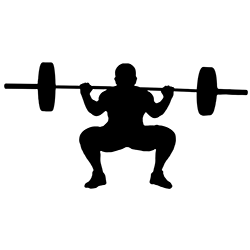
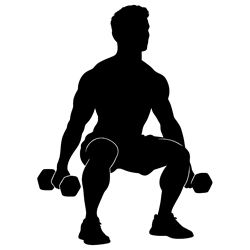
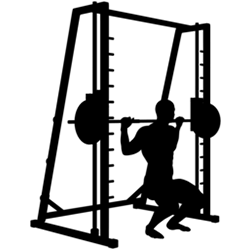
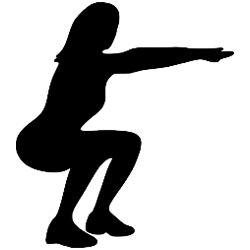
It's the main leg builder in most programs because it trains a lot of muscle at once and is easy to load up over time. Start with bodyweight to learn the depth and knee position. The barbell back squat lets you add the most weight but needs a rack with safety arms; dumbbells are simpler and stop being practical once they get too heavy to hold. The Smith machine takes balance out of it but locks the bar path, so set your feet a little forward.
How to do it (Barbell)
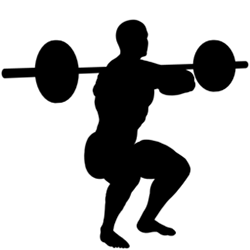
Set the bar at about shoulder height in the rack, step under it so it rests on your upper back just below your neck, and grip it wider than shoulder-width.
Unrack the bar, step back, and set your feet shoulder-width apart with your toes turned slightly out.
Bend your hips and knees to sit down between your feet, keeping your chest up and your knees tracking over your toes. Go until your thighs are at least parallel to the floor.
Drive back up through your whole foot. Use the safety arms when you train heavy and learn how to bail out of a failed rep before you need to.
Stand with your feet shoulder-width apart holding a dumbbell in each hand at your sides.
Push your hips back and bend your knees to squat down, keeping your chest up and the dumbbells hanging straight down.
Lower until your thighs are at least parallel to the floor, knees tracking over your toes.
Drive through your whole foot to stand back up. Once the dumbbells get too heavy to hold, switch to a goblet squat or rest them on your shoulders.
Set the bar at shoulder height, step under it so it rests on your upper back, and grip it wider than shoulder-width.
Twist to unlock, then walk your feet slightly forward and set them shoulder-width apart with your toes turned out a little.
Bend your hips and knees to lower until your thighs are at least parallel to the floor, knees tracking over your toes.
Drive back up through your whole foot, then twist the bar back into the hooks. The fixed bar path means your feet need to be a little in front of the bar, not under it.
Stand with your feet shoulder-width apart or slightly wider, toes turned out a little.
Push your hips back and bend your knees, keeping your chest up and your knees tracking over your toes.
Go down until your thighs are at least parallel to the floor, or lower if your hips and ankles allow it.
Drive back up through your whole foot. Hold your arms out in front of you if it helps you stay balanced.
Common mistakes
Cutting depth short
Stopping well above parallel shortens the range and usually means the weight is too heavy. Go until your thighs are at least parallel, as the steps describe.
Knees caving in on the way up
Knees that collapse inward as you stand leak force. Push them out so they track over your toes from the bottom to the top.
Heels coming off the floor
Shifting onto your toes throws your balance forward. Keep your whole foot down; a slightly wider stance or a bit more toe-out often helps.
Hips shooting up first
If your hips rise faster than your chest, the squat turns into a hinge and your lower back takes over. Lead with your chest and drive up through your whole foot.
Sets, reps and progression
How many sets you do and how close to failure you take them depend on your goal and your week, not on the exercise. These guides cover it:
Alternatives that train the same thing
Same movement, a different angle or piece of equipment.