Leg Press
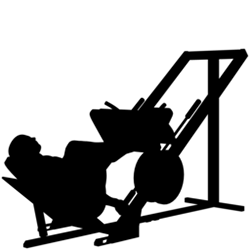
A machine leg exercise done sitting back in a sled: you lower the platform toward your chest by bending your knees, then press it away until your legs are almost straight.
- Primary muscles
- Quads, Glutes
- Secondary
- Hamstrings
- Difficulty
- Beginner
- Logged as
- Weight × reps
Loads from YouTube only when you press play. The video is by an independent creator.
Why do it
The leg press lets you load your quads and glutes heavily without balancing or bracing a bar, so it suits beginners, lifters working around a tired back and anyone adding leg volume. Because your back is supported, you can take sets closer to failure than with a squat. Foot position shifts the work: higher on the platform for more glutes and hamstrings, lower for more quads. Your depth ends where your hips start to tuck under, not at the end of the machine's range.
How to do it
Sit with your back and hips flat against the pad and place your feet shoulder-width apart on the platform.
Release the safety handles and lower the platform by bending your knees, going as deep as you can without your lower back rounding off the pad.
Press the platform away until your legs are almost straight, stopping short of locking your knees.
A higher foot position works the glutes and hamstrings more, a lower one the quads. Set your depth by where your hips start to tuck under, not by the machine's range.
Common mistakes
Lower back peeling off the pad
Going too deep makes your hips tuck under and your lower back round off the seat. Stop just before that point, even if the machine lets you go further.
Locking your knees at the top
Snapping your knees straight rests the load on your joints. Stop just short of lockout and keep the reps continuous.
Heels coming off the platform
Pushing through your toes moves the load onto the front of your feet. Press through your whole foot and keep your heels down.
Pushing on your knees with your hands
Helping with your hands hides how much your legs can actually press. Hold the handles and let your legs do the work.
Sets, reps and progression
How many sets you do and how close to failure you take them depend on your goal and your week, not on the exercise. These guides cover it:
Alternatives that train the same thing
Same movement, a different angle or piece of equipment.