Bulgarian Split Squat
A single-leg squat with your back foot on a bench behind you: you lower straight down on your front leg until the thigh is about parallel, then drive back up.
Equipment
- Primary muscles
- Quads, Glutes
- Secondary
- Hamstrings
- Difficulty
- Intermediate
- Logged as
- Weight × reps
- Primary muscles
- Quads, Glutes
- Secondary
- Hamstrings
- Difficulty
- Intermediate
- Logged as
- Weight × reps
- Primary muscles
- Quads, Glutes
- Secondary
- Hamstrings
- Difficulty
- Intermediate
- Logged as
- Weight × reps
- Primary muscles
- Quads, Glutes
- Secondary
- Hamstrings
- Difficulty
- Beginner
- Logged as
- Reps
Loads from YouTube only when you press play. The video is by an independent creator.
Why do it
Raising your back foot puts most of your weight on the front leg, so the Bulgarian split squat trains your quads and glutes hard with far less load than a back squat. It's useful for evening out sides and for lifters who struggle with depth in two-leg squats. Start with bodyweight, then add dumbbells, which are the easiest to set down if you lose balance. Use the Smith machine for a fixed, stable path, and a barbell inside a rack when you want to load it heaviest.
How to do it (Barbell)
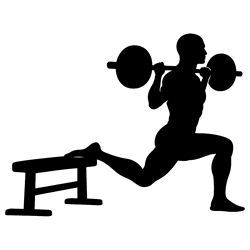
Set a barbell across your upper back and stand a long step in front of a bench, then place the top of one foot on it behind you.
Lower straight down until your front thigh is about parallel to the floor and your back knee nears the floor.
Keep your torso upright and the bar steady over your front midfoot.
Drive through the front heel to stand, finish all reps, then switch legs. Set up inside a rack so you can bail safely.
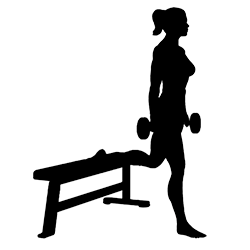
Stand a couple of feet in front of a bench with a dumbbell in each hand at your sides.
Place the top of your back foot on the bench and set your front foot far enough forward that your shin stays close to vertical at the bottom.
Bend your front knee to lower straight down until your front thigh is about parallel to the floor, keeping your torso upright.
Drive back up through your front foot. Your back leg is there for balance, not to push with. Finish all reps before switching.
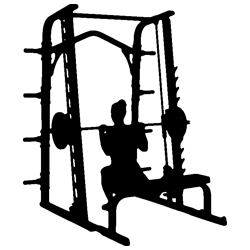
Set the bar at shoulder height and place a stable bench about two feet behind it.
Step under the bar so it rests on your upper back, put the top of one foot on the bench behind you and unrack.
Lower straight down by bending your front knee until your front thigh is about parallel to the floor.
Drive back up through your front foot. Finish all reps on one leg before switching. The fixed bar path means you have to get your front foot position right before you unrack.
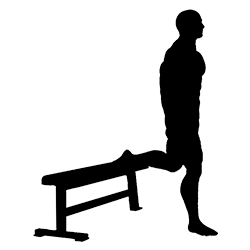
Stand a couple of steps in front of a bench with your arms at your sides or out in front for balance.
Place the top of your back foot on the bench and set your front foot far enough forward that your shin stays close to vertical at the bottom.
Bend your front knee to lower straight down until your front thigh is about parallel to the floor.
Drive back up through your front foot. Once you can do 15 or so clean reps per side, add dumbbells.
Common mistakes
Front foot too close to the bench
A short stance pushes your front knee far forward and lifts your heel. Set your front foot far enough out that your shin stays close to vertical at the bottom.
Pushing with the back leg
Your rear foot is there for balance. If your back leg feels tired, shift your weight onto the front foot and drive up through it.
Folding your torso forward
Tipping your chest toward the floor shifts load away from your quads and makes balance harder. Keep your torso upright and lower straight down.
Feet in one line
Lining your front and back feet up like a tightrope makes you wobble side to side. Keep them about hip-width apart, like standing on train tracks.
Sets, reps and progression
How many sets you do and how close to failure you take them depend on your goal and your week, not on the exercise. These guides cover it:
Alternatives that train the same thing
Same movement, a different angle or piece of equipment.