Decline Sit Up
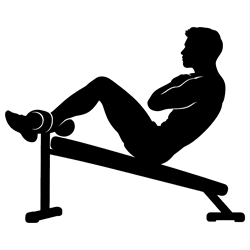
With your feet hooked under the pads of a decline bench, you curl your torso up to sitting and lower back down slowly, working your abs through a long range.
- Primary muscles
- Abs
- Secondary
- Lower abs
- Difficulty
- Beginner
- Logged as
- Reps
Loads from YouTube only when you press play. The video is by an independent creator.
Why do it
The decline bench makes a sit-up harder by putting your upper body below your hips, so your abs have more to lift and work through a longer range than in a crunch. It suits people who find floor sit-ups too easy and want a step up without a cable machine. Your hip flexors help pull you up, so the curl at the start matters: roll up one vertebra at a time instead of jerking up with a flat back. Start on a shallow angle, then steepen it or hold a plate on your chest as you get stronger.
How to do it
Hook your feet under the pads of a decline bench and lie back with your hands crossed on your chest or beside your head.
Curl your torso up one vertebra at a time until you are sitting upright.
Lower slowly back down, keeping tension in your abs the whole way.
Stop just short of resting on the bench and repeat. A steeper angle makes it harder, so start shallow.
Common mistakes
Sitting up with a flat back
Lifting your torso as one straight piece turns it into a hip flexor exercise. Tuck your chin and curl up from the top of your spine first.
Starting on a steep angle
Too steep a bench makes people throw themselves up with momentum. Start shallow and only raise the angle once every rep is smooth.
Resting on the bench between reps
Dropping all the way down and pausing releases the tension in your abs. Stop just short of the bench and go straight into the next rep.
Pulling on your head
Hands behind your head tend to yank your neck forward as you tire. Cross your arms on your chest, or keep your fingertips only lightly touching.
Sets, reps and progression
How many sets you do and how close to failure you take them depend on your goal and your week, not on the exercise. These guides cover it:
Alternatives that train the same thing
Same movement, a different angle or piece of equipment.