Dragon Flag
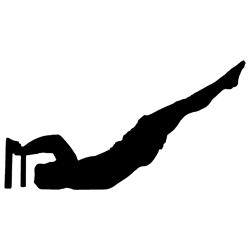
Lying on a bench and gripping it behind your head, you lower your whole body as one straight line from your shoulders, then pull it back up to vertical.
- Primary muscles
- Abs
- Secondary
- Lower abs, Obliques, Lower back
- Logged as
- Reps
Loads from YouTube only when you press play. The video is by an independent creator.
Why do it
The dragon flag is one of the hardest bodyweight core moves: your abs keep your entire body rigid while it pivots at your shoulders like a lever. It's for people who already handle hanging leg raises and long hollow holds comfortably. Most people build up with lowering-only reps, bent knees or a tucked version, since the full straight-body rep is far harder than it looks. Unlike a leg raise, your hips don't bend; your whole body moves as one piece.
How to do it
Lie on a bench and grip it firmly behind your head to anchor your upper body.
Lift your legs and hips until your body is vertical, resting only on your shoulders and upper back.
Lower your whole body as one rigid line toward the bench, moving only at the shoulders, until you're just above it.
Pull back up to vertical without letting your hips pike. Start with lowering-only reps or bent knees; the straight-body version is far harder than it looks.
Common mistakes
Bending at the hips
Piking shortens the lever and turns it into a leg raise. Keep your hips extended and squeeze your glutes so your body stays straight from shoulders to feet.
Rolling onto your neck
Letting your weight drift back onto your head and neck leaves you with no stable base. Keep it on your upper back and shoulders, pulling yourself into the bench with your grip.
Dropping your body fast
Falling toward the bench skips the hardest part. Lower slowly and stop just above the bench; if you can't control it, bend your knees.
Trying full reps too soon
Straight-body reps before you can control lowering-only reps usually end in piking and swinging. Build up with negatives and tucked reps first.
Sets, reps and progression
How many sets you do and how close to failure you take them depend on your goal and your week, not on the exercise. These guides cover it:
Alternatives that train the same thing
Same movement, a different angle or piece of equipment.