Hollow Body Hold
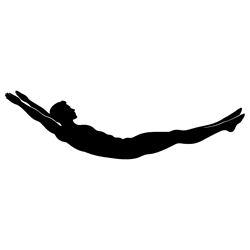
Lying on your back with arms overhead and straight legs raised, you hold a shallow banana shape with your lower back glued to the floor.
- Primary muscles
- Abs, Lower abs
- Secondary
- Obliques
- Difficulty
- Intermediate
- Logged as
- Time
Loads from YouTube only when you press play. The video is by an independent creator.
Why do it
The hollow hold is a gymnastics staple that teaches you to keep your abs braced and your lower back flat while your arms and legs pull away, and it's the body position behind many calisthenics skills. Holding still for time sets it apart from rep-based moves like leg raises, and it suits anyone who can already hold a plank comfortably. Scale it by tucking your knees or bringing your arms to your sides, then extend them as you get stronger.
How to do it
Lie on your back and press your lower back firmly into the floor.
Lift your shoulders and legs off the floor, arms extended overhead and legs straight, so your body forms a shallow banana shape.
Hold for the set time while keeping your lower back glued to the floor.
Bend your knees or bring your arms to your sides if your back starts to lift; the position only counts while it stays down.
Common mistakes
Lower back lifting off the floor
Once your back arches, the hold no longer counts. Raise your legs higher or bend your knees until your back stays down, and only then lower them.
Lifting only your head
Craning your head forward without lifting your shoulder blades puts the effort in your neck. Lift your shoulders off the floor by curling your upper back.
Holding your breath
Bracing hard makes people stop breathing, which cuts the hold short. Take small, steady breaths while keeping your ribs pulled down.
Chasing time over shape
A long hold in a broken position does less than a short one done right. End the set when your back lifts, and build time from there.
Sets, reps and progression
How many sets you do and how close to failure you take them depend on your goal and your week, not on the exercise. These guides cover it:
Alternatives that train the same thing
Same movement, a different angle or piece of equipment.