Muscle Up
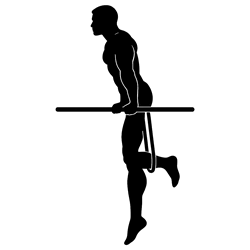
A bar skill that joins a pull-up and a dip in one movement: you pull explosively, lean your chest over the bar and press yourself up to straight arms.
- Primary muscles
- Lower chest, Lats
- Secondary
- Front delts, Upper back, Upper chest, Middle chest, Biceps, Triceps
- Logged as
- Reps
Loads from YouTube only when you press play. The video is by an independent creator.
Why do it
The muscle up is a gymnastics skill rather than a regular strength exercise, so it suits people who already have strong pull-ups and dips and want a new challenge. The hard part is the transition from pulling to pushing, which takes practice more than raw strength. Build pulling height with high pull-ups and practice the transition with a band before trying full reps. Train it early in a session while you're fresh, with low reps and full rest.
How to do it
Be able to do around 10 strict pull-ups and 10 dips before you try this.
Grip the bar overhand at shoulder width and hang with your arms straight and core tight.
Pull explosively, aiming to bring the bar toward your lower chest rather than your chin.
As you reach the top, lean your chest over the bar and drive your elbows up and behind it, then press out to straight arms.
Reverse it: bend your elbows, roll your chest back under the bar and lower to a full hang. A small swing is fine, but if you're kipping hard you're skipping the transition rather than learning it.
Common mistakes
Pulling only to your chin
Normal pull-up height leaves no room to get over the bar. Pull explosively toward your lower chest so your shoulders can move over it.
Kipping through it
A hard kip can throw you over the bar without teaching you the transition. A small swing is fine; keep it controlled so the pull and lean do the work.
Getting one arm over first
Throwing one elbow over the bar before the other lets you scrape up unevenly. Turn both wrists and bring both elbows up behind the bar together.
Trying it too early
Without strong pull-ups and dips, attempts tend to turn into flailing. Build those first, then practice with band-assisted reps.
Sets, reps and progression
How many sets you do and how close to failure you take them depend on your goal and your week, not on the exercise. These guides cover it:
Alternatives that train the same thing
Same movement, a different angle or piece of equipment.