Plank
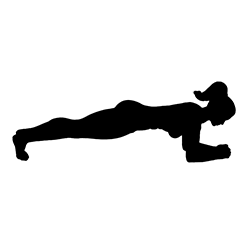
Supported on your forearms and toes, you hold your body in a straight line from head to heels, bracing your abs and lower back against sagging.
Equipment
- Primary muscles
- Lower back, Abs
- Secondary
- Front delts, Obliques
- Difficulty
- Beginner
- Logged as
- Time
- Primary muscles
- Lower back, Abs
- Secondary
- Front delts, Obliques
- Difficulty
- Intermediate
- Logged as
- Weight × time
Loads from YouTube only when you press play. The video is by an independent creator.
Why do it
The plank teaches you to brace your trunk and hold your spine still, and it's often the first core exercise beginners learn because it needs no equipment and little skill. Stick with the bodyweight version until you can hold a hard, clean plank for a good while; after that, a plate on your upper back adds load instead of making the hold longer and longer. Squeezing your glutes and thighs and pulling your elbows toward your toes makes even a short plank much harder.
How to do it (Bodyweight)
Set your elbows directly under your shoulders with your forearms flat on the floor.
Push up onto your toes so your body forms a straight line from head to heels.
Squeeze your abs, glutes and quads to stop your hips from sagging or riding up.
Hold for the set time with your neck neutral, then lower down under control. Quality beats duration; a hard 30-second plank does more than a sloppy two-minute one.
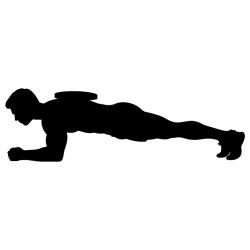
Have a partner place a weight plate on your upper back, or set it there yourself before lifting up, then get into a forearm plank with your elbows under your shoulders.
Form a straight line from head to heels and brace your abs and glutes.
Hold for the set time without letting your hips sag or rise.
Lower your knees to the floor to finish and slide the plate off. Place the plate on the upper back, not the lower back.
Common mistakes
Letting your hips sag
When your hips drop, your lower back takes the strain and your abs switch off. Squeeze your glutes and tuck your pelvis slightly so your body stays in one line.
Piking your hips up
Raising your hips shortens the lever and makes the hold easier. Lower them until you're straight from head to heels; a mirror or a quick video helps.
Holding long with poor form
Chasing minutes with a sagging back only practices a bad position. End the set when the line breaks, and add difficulty instead of time.
Placing the plate on your lower back
A plate on your lower back pushes your hips toward the floor. Place it across your upper back, between your shoulder blades, with a partner's help if you can.
Sets, reps and progression
How many sets you do and how close to failure you take them depend on your goal and your week, not on the exercise. These guides cover it:
Alternatives that train the same thing
Same movement, a different angle or piece of equipment.