Recumbent Stepper
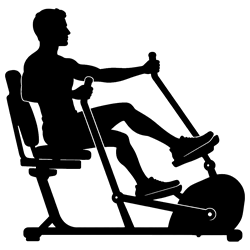
A seated stepper where you push the pedals away one at a time while linked handles move with them, so your arms and legs work together.
- Primary muscles
- Quads, Glutes
- Secondary
- Hamstrings, Triceps, Lats
- Logged as
- Session: time, plus what the machine shows, such as distance and calories
Loads from YouTube only when you press play. The video is by an independent creator.
Why do it
The recumbent stepper combines a supported seat with a full-body movement: arms and legs are linked, so your arms can help when your legs tire. It's common in rehab settings because it's easy to get on, low impact and needs no balance, but it can be hard work on higher levels. Keep the push smooth and let your legs lead; the handles are there to share the effort, not to take it over.
How to do it
Sit back in the seat, slide it so your knees stay slightly bent at full reach and put your feet on the pedals and your hands on the moving handles.
Push the pedals away one at a time while the handles move with them, so your arms and legs work together.
Keep your back against the seat and the movement smooth; your arms help, your legs lead.
Lower the level for the last minute. Log level changes as you make them and copy steps, watts and calories from the display at the end.
Common mistakes
Seat too close
Cramped knees cut the push short. Slide the seat so your knees stay slightly bent at full reach.
Pulling with the arms
Yanking the handles turns it into an arm workout. Let your legs lead and use your arms to help.
Short, choppy pushes
Quick jabs on the pedals waste effort. Push through the full range in a smooth rhythm.
Sets, reps and progression
How many sets you do and how close to failure you take them depend on your goal and your week, not on the exercise. These guides cover it:
Alternatives that train the same thing
Same movement, a different angle or piece of equipment.