Russian Twist
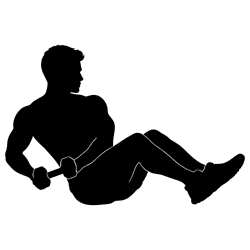
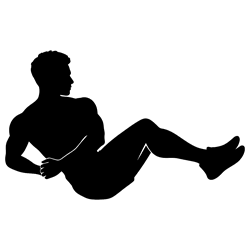
Sitting leaned back with your knees bent and feet off the floor if you can, you rotate your torso side to side, bringing your hands or a dumbbell beside each hip.
Equipment
- Primary muscles
- Obliques, Abs
- Difficulty
- Beginner
- Logged as
- Weight × reps
- Primary muscles
- Obliques, Abs
- Difficulty
- Beginner
- Logged as
- Reps
Loads from YouTube only when you press play. The video is by an independent creator.
Why do it
The Russian twist trains your obliques through rotation while your abs hold you in the leaned-back position. It suits beginners and needs only the floor. Start with the bodyweight version and your heels down, then lift your feet, and add a dumbbell once bodyweight sets get easy, keeping it close to your body. Unlike the cable woodchop, there's no standing or pulley involved; the challenge comes from holding the lean while you turn.
How to do it (Dumbbell)
Sit on the floor with your knees bent, lean back to about 45 degrees and hold a dumbbell with both hands in front of your chest.
Lift your feet off the floor if you can and keep your back straight.
Rotate your torso to one side until the dumbbell is beside your hip, then rotate to the other side.
Move slowly and keep the dumbbell close to your body. Keep your heels on the floor to make it easier.
Sit on the floor with your knees bent, lean back to about 45 degrees and lift your feet off the floor if you can.
Clasp your hands in front of your chest and keep your back straight.
Rotate your torso to one side until your hands reach beside your hip, then rotate to the other side.
Keep your hips still and turn from the ribcage. Keep your heels on the floor to make it easier.
Common mistakes
Moving only your arms
Swinging your hands from side to side while your chest faces forward skips the twist. Turn your ribs and shoulders so your chest follows your hands.
Rounding your back
Slumping into a C shape takes load off your abs and shortens the twist. Sit tall, lean back from your hips and keep your chest up.
Swinging a heavy dumbbell
A heavy weight moved quickly is hard to stop at the end of each turn. Move slowly, keep the dumbbell close and only go as heavy as you can control.
Letting your knees sway
If your legs swing the opposite way, the twist is happening at your hips, not your torso. Keep your knees still and pointing forward.
Sets, reps and progression
How many sets you do and how close to failure you take them depend on your goal and your week, not on the exercise. These guides cover it:
Alternatives that train the same thing
Same movement, a different angle or piece of equipment.