Side Bend
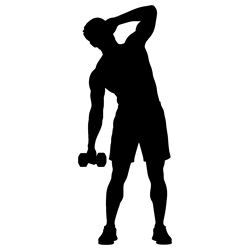
Standing tall with a dumbbell in one hand, you bend sideways toward the weight and pull yourself back up past upright, working the obliques on the opposite side.
- Primary muscles
- Obliques
- Difficulty
- Beginner
- Logged as
- Weight × reps
Loads from YouTube only when you press play. The video is by an independent creator.
Why do it
Side bends load your obliques through lateral flexion, the side-to-side bending of your waist, with a weight you can steadily increase. They suit anyone who wants direct oblique work standing up, and they're simple to learn with a single dumbbell. Unlike twists and woodchops, there's no rotation; you bend straight to the side and come back. Hold only one dumbbell: with two, they balance each other out and your obliques have little to do.
How to do it
Stand tall with a dumbbell in one hand at your side and the other hand on your hip or behind your head.
Bend sideways toward the dumbbell, letting it slide down your thigh.
Pull yourself back up and slightly past upright using the obliques on the opposite side.
Finish the set, then switch hands. Use one dumbbell only; holding two cancels the load out.
Common mistakes
Holding a dumbbell in each hand
Two weights cancel each other out, so your obliques barely work. Use one dumbbell and do all your reps on one side before switching.
Leaning forward or back
Drifting forward or back turns the bend into a twist or a hinge. Keep your shoulders and hips in one plane, as if sliding between two panes of glass.
Bouncing out of the bottom
Dropping into the bottom and bouncing back up takes the work off your obliques. Lower under control and pull back up with the opposite side.
Stopping at upright
Coming back only to straight means the working side never fully contracts. Pull slightly past upright before starting the next rep.
Sets, reps and progression
How many sets you do and how close to failure you take them depend on your goal and your week, not on the exercise. These guides cover it:
Alternatives that train the same thing
Same movement, a different angle or piece of equipment.