Ski Erg
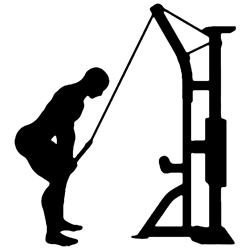
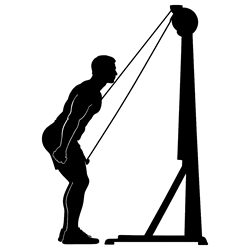
A standing machine where you pull two handles from overhead down past your thighs, like double-poling on cross-country skis.
- Primary muscles
- Lats, Triceps, Abs
- Secondary
- Upper back, Glutes, Hamstrings
- Logged as
- Session: time, plus what the machine shows, such as distance and calories
Loads from YouTube only when you press play. The video is by an independent creator.
Why do it
The ski erg mimics cross-country double-poling: you pull two handles down from overhead with a hip hinge, so your lats, triceps and core drive the stroke. It's a strong full-body conditioning tool and a good stand-in for the rower when you want less leg work. The common trap is turning it into an arm exercise; your arms guide the handles, but the power comes from hinging at the hips and pulling with your lats.
How to do it
Stand facing the machine with your feet hip-width apart, grab both handles overhead and set the damper around 3 to 5.
Pull the handles down by hinging at the hips and bending your knees slightly, driving your arms down past your thighs.
Rise back up with straight arms reaching high before the next pull; the power comes from the hip hinge and your lats, not from your arms alone.
Pull easy for the last minute. Log damper and stroke rate as they change and copy distance, split per 500 m and watts from the display at the end.
Common mistakes
Pulling with the arms only
Pulling with straight hips leaves your arms doing everything. Hinge at the hips and bend your knees slightly with each pull.
Squatting deep
Dropping into a squat turns each pull into a leg movement. Keep the knee bend small; it's a hinge, not a squat.
Cutting the reach short
Not reaching high again shortens every stroke. Rise tall with straight arms before the next pull.
Sets, reps and progression
How many sets you do and how close to failure you take them depend on your goal and your week, not on the exercise. These guides cover it:
Alternatives that train the same thing
Same movement, a different angle or piece of equipment.