Stair Climber
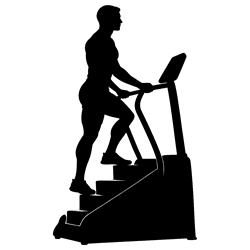
Climbing a revolving staircase at a set pace, pushing through your whole foot on each step, mainly working your quads and glutes.
- Primary muscles
- Quads, Glutes
- Secondary
- Hamstrings, Calves
- Logged as
- Session: time, plus what the machine shows, such as distance and calories
Loads from YouTube only when you press play. The video is by an independent creator.
Why do it
On a stair climber every step lifts your bodyweight, so even the slowest levels are real work for most people while the impact stays low. Much of that effort disappears if you lean on the rails, which is the most common way people make it easier without noticing. Climb tall with your whole foot on each step and pick a level you can hold upright. Floors climbed is the most useful number to compare sessions by.
How to do it
Step on while holding the rails, start on a low level and let the stairs reach a steady pace.
Climb with your whole foot on each step, stand tall and push through your heels.
Rest your hands lightly on the rails for balance only; leaning on them takes the load off your legs.
Slow down for the last minutes and wait until the stairs stop before you step off. Log level changes as you make them and copy floors and steps from the display at the end.
Common mistakes
Leaning on the rails
Supporting your weight with your arms takes load off your legs. Rest your hands lightly, for balance only.
Stepping on your toes
Stepping on the front of the foot shifts the work to your calves. Put your whole foot on each step and push through the heel.
Level too high
A pace you can't hold upright makes you hunch and hang on. Pick a level you can climb tall.
Sets, reps and progression
How many sets you do and how close to failure you take them depend on your goal and your week, not on the exercise. These guides cover it:
Alternatives that train the same thing
Same movement, a different angle or piece of equipment.