Stepper
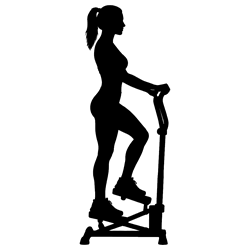
Pressing two pedals down in turn in a steady rhythm, standing upright with a light grip on the handles, mainly working your quads and glutes.
- Primary muscles
- Quads, Glutes
- Secondary
- Hamstrings, Calves
- Logged as
- Session: time, plus what the machine shows, such as distance and calories
Loads from YouTube only when you press play. The video is by an independent creator.
Why do it
A stepper gives you a stair-climbing motion in a small space: the pedals move under you instead of a revolving staircase, so it fits where a stair climber won't. The work comes from pressing each pedal through its full range; quick, shallow steps look busy but barely load your legs. Keep an even rhythm and an upright posture, and use the step count to compare sessions.
How to do it
Stand on both pedals holding the handles and set a low level to start.
Press each pedal down in turn with your whole foot, in a smooth, even rhythm rather than short choppy steps.
Stand upright with your hips over your feet and keep a light grip on the handles.
Lower the level for the last minute. Log level changes as you make them and copy the steps from the display at the end.
Common mistakes
Short, choppy steps
Tiny steps hardly move the pedals. Press each one down through its full range.
Leaning on the handles
Leaning on the handles takes weight off your legs. Hold them lightly.
Hunching forward
Stand upright with your hips over your feet so your glutes and quads share the work.
Sets, reps and progression
How many sets you do and how close to failure you take them depend on your goal and your week, not on the exercise. These guides cover it:
Alternatives that train the same thing
Same movement, a different angle or piece of equipment.