Suitcase Carry
You walk with a heavy weight in one hand only, keeping your torso upright against the sideways pull, which trains your obliques, grip and traps.
Equipment
- Primary muscles
- Obliques
- Secondary
- Forearm flexors, Traps, Abs
- Difficulty
- Beginner
- Logged as
- Weight × time
- Primary muscles
- Obliques
- Secondary
- Forearm flexors, Traps, Abs
- Difficulty
- Beginner
- Logged as
- Weight × time
Loads from YouTube only when you press play. The video is by an independent creator.
Why do it
Carrying a load on one side forces your trunk to fight being pulled over, so this is a core exercise first and a grip exercise second. It's easy to learn, suits any level and has an obvious everyday link: carrying a heavy bag without leaning. Compared with carrying a weight in each hand, it's much harder on the obliques even though the total load is lighter. Dumbbell or kettlebell makes little difference; pick whichever you have in a weight that makes staying upright hard work.
How to do it (Dumbbell)
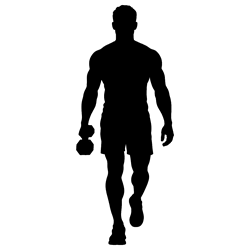
Pick up a heavy dumbbell in one hand with a flat back and stand tall.
Keep your shoulders level and your torso perfectly upright, resisting the pull to one side.
Walk with short, controlled steps for the set time.
Set the dumbbell down with a flat back and switch hands. The point is to not lean; if your shoulder drops toward the weight, it is too heavy.
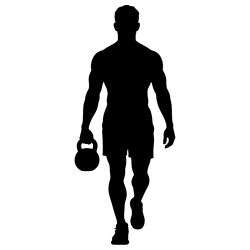
Pick up a heavy kettlebell in one hand with a flat back and stand tall.
Keep your shoulders level and your torso perfectly upright, resisting the pull to one side.
Walk with short, controlled steps for the set time.
Set the kettlebell down with a flat back and switch hands. The point is to not lean; if your shoulder drops toward the weight, it is too heavy.
Common mistakes
Leaning away from the weight
Bending your torso the other way to counter the load lets you carry more but defeats the point. Stay vertical, as if a string were pulling your head toward the ceiling.
Letting the loaded shoulder drop
If the shoulder on the weight side sinks, the load is winning. Keep both shoulders level, and go lighter if you can't.
Rushing with long strides
Big, fast steps make the weight swing and hide the lean. Take short, controlled steps so your trunk has to hold still.
Picking it up with a rounded, twisted back
The pick-up is where the set often goes wrong. Squat down beside the weight, keep your back flat and stand up fully before you start walking.
Sets, reps and progression
How many sets you do and how close to failure you take them depend on your goal and your week, not on the exercise. These guides cover it:
Alternatives that train the same thing
Same movement, a different angle or piece of equipment.