Thruster
A front squat flowing straight into an overhead press: you squat with the weight at your shoulders and use the drive out of the bottom to push it overhead in one motion.
Equipment
- Primary muscles
- Quads, Glutes, Front delts
- Secondary
- Triceps, Hamstrings, Abs
- Logged as
- Weight × reps
- Primary muscles
- Quads, Glutes, Front delts
- Secondary
- Triceps, Hamstrings, Abs
- Logged as
- Weight × reps
- Primary muscles
- Quads, Glutes, Front delts
- Secondary
- Triceps, Hamstrings, Abs
- Logged as
- Weight × reps
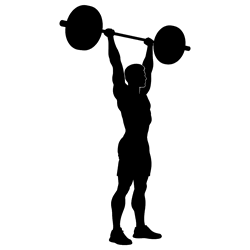
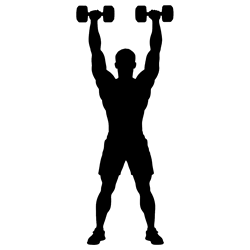
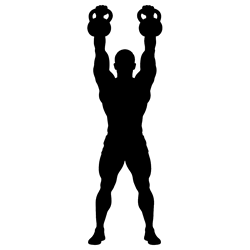
Loads from YouTube only when you press play. The video is by an independent creator.
Why do it
It's a conditioning move that works your legs and shoulders together and gets your heart rate up fast, which is why it shows up so often in circuits and timed workouts. Because your legs launch the weight, you can press more than with strict pressing, but the pace makes form slip once you're tired. Dumbbells ask less of your front-rack mobility than a barbell; the barbell allows the heaviest loads; kettlebells rest on your forearms and work with one or two bells.
How to do it (Barbell)
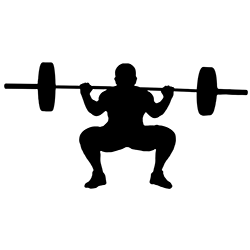
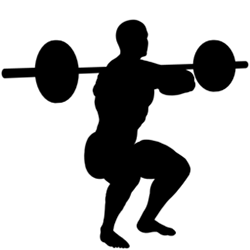
Hold a barbell in the front rack position with your elbows up and your feet shoulder-width apart.
Squat down with your torso upright until your thighs are at least parallel to the floor.
Drive up hard out of the squat and use the momentum to press the bar overhead in one continuous motion.
Lock out overhead, then lower the bar back to the front rack and go straight into the next squat. Breathe at the top; there is no other pause.
Hold a dumbbell at each shoulder with your feet shoulder-width apart.
Squat down with your torso upright until your thighs are at least parallel to the floor.
Drive up hard out of the squat and use the momentum to press both dumbbells overhead in one continuous motion.
Lock out overhead, then lower the dumbbells to your shoulders and go straight into the next squat.
Clean one or two kettlebells to the rack position, with the bells resting on your forearms and your feet shoulder-width apart.
Squat down with your torso upright until your thighs are at least parallel to the floor.
Drive up hard out of the squat and use the momentum to press the kettlebells overhead in one continuous motion.
Lock out overhead, then lower back to the rack and go straight into the next squat.
Common mistakes
Pressing with the arms only
Pausing at the top of the squat before pressing wastes the leg drive. Let your hips and legs launch the weight and push it the rest of the way.
Elbows dropping in the squat
Low elbows let the weight pull your chest forward at the bottom. Keep your elbows up and your torso upright all the way down.
Squatting shallower as you tire
Reps tend to get shorter as fatigue builds. Hold the depth, thighs at least parallel on every rep, even if you slow down.
Holding your breath the whole set
With no pause, it's easy to stop breathing. Take a breath at the top while the weight is locked out, as the steps describe.
Sets, reps and progression
How many sets you do and how close to failure you take them depend on your goal and your week, not on the exercise. These guides cover it:
Alternatives that train the same thing
Same movement, a different angle or piece of equipment.