Toes to Bar
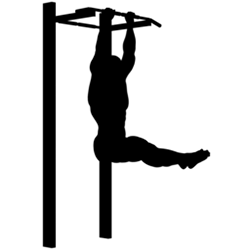
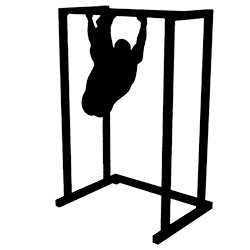
Hanging from a pull-up bar, you raise your straight legs and curl your pelvis until your toes touch the bar, a demanding move for your abs and lower abs.
- Primary muscles
- Abs, Lower abs
- Secondary
- Obliques, Forearm flexors
- Difficulty
- Advanced
- Logged as
- Reps
Loads from YouTube only when you press play. The video is by an independent creator.
Why do it
This is the hardest of the common hanging core moves: your legs travel all the way to the bar, so your abs have to curl your pelvis up, not just lift your thighs. It suits advanced trainees who can already do strict hanging leg raises, and your grip has to last the whole set too. Done strictly, without swing, it's a slow, hard core exercise. In conditioning workouts it's often done with a kipping swing for speed, which is a different skill and moves much of the work away from your abs.
How to do it
Hang from a pull-up bar with an overhand grip at about shoulder width, arms straight.
Pull your shoulder blades down so you're not hanging passively.
Raise your straight legs and curl your pelvis up until your toes touch the bar between your hands.
Lower them slowly without swinging. If you can't reach the bar yet, work up through hanging leg raises first.
Common mistakes
Swinging to get your feet up
A big swing lets momentum do the work your abs should. Pull your shoulders down, stop the swing at the bottom and start each rep from a still hang.
Lifting the legs without curling the pelvis
If only your hips bend, your hip flexors lift your legs and your abs barely work. Think about tilting your pelvis up and rounding your lower back slightly as your feet rise.
Hanging loose from your shoulders
With your shoulders up by your ears, your body swings more and the hang gets sloppy. Pull your shoulder blades down before every rep.
Dropping your legs after each touch
Letting your legs fall starts a swing that ruins the next rep. Lower them slowly to the bottom; the way down is a big part of the work.
Sets, reps and progression
How many sets you do and how close to failure you take them depend on your goal and your week, not on the exercise. These guides cover it:
Alternatives that train the same thing
Same movement, a different angle or piece of equipment.