V-Up
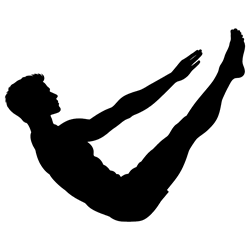
Lying flat with your arms overhead, you lift your straight legs and torso at the same time and reach for your feet, folding into a V that trains your upper and lower abs.
- Primary muscles
- Abs, Lower abs
- Difficulty
- Intermediate
- Logged as
- Reps
Loads from YouTube only when you press play. The video is by an independent creator.
Why do it
The V-up works both ends of your abs at once: your upper body curls up while your legs rise, and you balance briefly on your tailbone at the top. It's a step up from sit-ups and leg raises and suits trainees who can already hold a solid hollow position. Because your arms start overhead and your legs stay long, the levers are long and it gets hard fast. Bend your knees slightly or tuck them in to scale it down.
How to do it
Lie flat on your back with your arms extended overhead and your legs straight.
In one motion, lift your legs and torso and reach your hands toward your feet so your body forms a V.
Pause briefly at the top, balancing on your tailbone.
Lower back down slowly without letting your heels or shoulders rest on the floor. Bend your knees slightly if your hamstrings are tight.
Common mistakes
Arching your lower back at the bottom
With arms and legs stretched out, your lower back tends to peel off the floor. Press it down before each rep; if it won't stay down, keep your legs hovering a little higher.
Jerking up with your arms
Throwing your arms forward to get up hides weak abs. Lift in one smooth motion, with your chest and legs rising at the same speed.
Collapsing on the way down
Dropping flat between reps lets your abs rest and starts each rep with a bounce. Lower slowly and stop with heels and shoulders just above the floor.
Forcing straight legs with tight hamstrings
If straight legs stop you halfway and round your back, your hamstrings are the limit, not your abs. Bend your knees slightly and reach as far as you can.
Sets, reps and progression
How many sets you do and how close to failure you take them depend on your goal and your week, not on the exercise. These guides cover it:
Alternatives that train the same thing
Same movement, a different angle or piece of equipment.