Vertical Climber
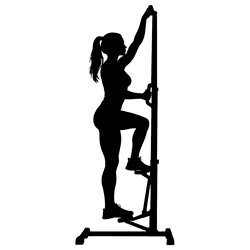
A climbing machine where you drive one leg down while the opposite arm pulls down, in a steady rhythm like climbing a ladder.
- Primary muscles
- Quads, Glutes, Lats
- Secondary
- Hamstrings, Front delts, Biceps, Abs
- Logged as
- Session: time, plus what the machine shows, such as distance and calories
Loads from YouTube only when you press play. The video is by an independent creator.
Why do it
The vertical climber works your arms, back and legs together in a ladder-like pattern with no impact. It's compact and popular in home gyms, and it gets hard faster than its size suggests. Stroke length is the main dial: long strokes are slower and work the muscles harder, short quick ones push the pace. Staying upright matters more than speed, since hanging back on your arms turns it into an awkward pull.
How to do it
Stand on the foot pedals and grab the handles at about head height, your body upright and facing the machine.
Climb by driving one leg down while the opposite arm pulls down, in an even rhythm like climbing a ladder.
Use long strokes for strength and short, quick ones for pace; stay upright instead of hanging back on your arms.
Slow down for the last minute. Copy the height climbed from the display at the end.
Common mistakes
Hanging back on the arms
Leaning away from the machine overloads your arms. Stay upright and close to it.
Only short strokes
Short, quick strokes hide a lack of range. Mix in long strokes to work your legs through their full range.
Moving the same arm and leg
Pair the opposite arm and leg, like on a ladder, for a smooth rhythm.
Sets, reps and progression
How many sets you do and how close to failure you take them depend on your goal and your week, not on the exercise. These guides cover it:
Alternatives that train the same thing
Same movement, a different angle or piece of equipment.