Wall Ball
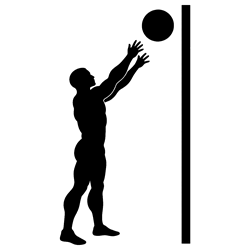
A conditioning move where you squat holding a medicine ball at your chest, then drive up and throw it to a target high on the wall, catching it as you sink into the next squat.
- Primary muscles
- Quads, Glutes, Front delts
- Secondary
- Triceps, Abs
- Logged as
- Weight × reps
Loads from YouTube only when you press play. The video is by an independent creator.
Why do it
Wall balls are a staple of circuit and functional fitness workouts because they combine a squat and an upward throw into one repeatable rhythm that taxes your legs, shoulders and lungs together. They're simple to learn, and a light ball keeps them accessible for beginners. Compared with a thruster the load is lighter and the ball leaves your hands, so there's no lockout overhead and the catch becomes part of the work.
How to do it
Stand an arm's length from a wall holding a medicine ball at your chest, feet shoulder-width apart.
Squat down until your thighs are at least parallel to the floor.
Drive up out of the squat and throw the ball to a target about 3 metres up the wall.
Catch the ball at chest height as it drops and sink straight into the next squat. Each throw is one rep.
Common mistakes
Squatting too shallow
Half squats feel faster but leave your legs out of it. Sink until your thighs are at least parallel before each throw.
Throwing with the arms
If the ball goes up mostly from your arms, your shoulders tire fast. Drive up out of the squat and let your legs launch it.
Standing too far from the wall
Too far back and the ball comes down in front of you, pulling you forward. Stand about an arm's length away so it drops back to your chest.
Catching and then pausing
Catching, standing still and only then squatting breaks the rhythm. Absorb the catch at chest height and sink straight into the next squat.
Sets, reps and progression
How many sets you do and how close to failure you take them depend on your goal and your week, not on the exercise. These guides cover it:
Alternatives that train the same thing
Same movement, a different angle or piece of equipment.