Windmill
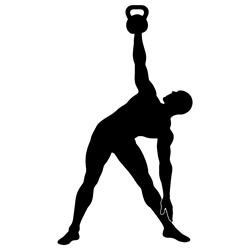
With a kettlebell locked out overhead, you push your hip to the side and hinge down until your free hand reaches your shin or the floor, training obliques and shoulder stability.
- Primary muscles
- Obliques, Abs, Front delts
- Secondary
- Hamstrings, Glutes
- Logged as
- Weight × reps
Loads from YouTube only when you press play. The video is by an independent creator.
Why do it
The windmill combines a sideways hip hinge with an overhead hold, so your obliques, the loaded shoulder and your hamstrings all work at once. It's a skill exercise: learn it with no weight, then a light kettlebell, before going heavier, and expect your hip and hamstring mobility to set how deep you can go. It suits kettlebell users who already press overhead comfortably and want a slow, controlled core move. Unlike a side bend, your hips move back and out, so the motion is a hinge, not a crunch to the side.
How to do it
Press a kettlebell overhead with one arm and turn both feet about 45 degrees away from that arm.
Push your hip out toward the kettlebell side and slide your free hand down the inside of the front leg, keeping your eyes on the kettlebell.
Lower until your hand reaches your shin or the floor, with the top arm still locked out and vertical.
Reverse the movement to stand up. Learn it with no weight first, then with a light kettlebell.
Common mistakes
Taking your eyes off the kettlebell
Looking down lets the arm drift and the bell starts to tip. Keep your eyes on it the whole time so the arm stays vertical.
Bending the top arm
A bent elbow lets the kettlebell sink toward your head and the shoulder loses its stable position. Keep the arm locked out and vertical from start to finish.
Bending sideways instead of hinging
Folding at the waist without moving your hips turns it into a side bend. Push your hip out toward the kettlebell side first, then let your torso lower.
Going deeper than your hamstrings allow
Forcing your hand to the floor rounds your back and pulls the top arm off line. Stop at your shin until your mobility lets you go further with a flat back.
Sets, reps and progression
How many sets you do and how close to failure you take them depend on your goal and your week, not on the exercise. These guides cover it:
Alternatives that train the same thing
Same movement, a different angle or piece of equipment.