Assisted Pull Up
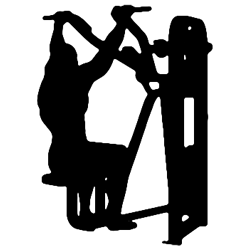
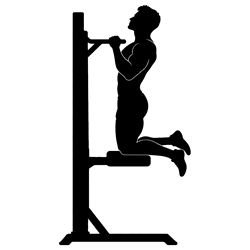
A pull-up on a counterweight machine: kneeling on a pad that helps lift you, you pull up with an overhand grip slightly wider than your shoulders, mainly using your lats.
- Primary muscles
- Lats
- Secondary
- Upper back, Rear delts, Biceps, Forearm flexors
- Difficulty
- Beginner
- Logged as
- Assistance × reps
Loads from YouTube only when you press play. The video is by an independent creator.
Why do it
If a bodyweight pull-up is still out of reach, this machine lets you do the real movement with part of your weight taken off. The overhand grip puts more of the work on your lats and less on your biceps than the underhand version, so it often feels harder at the same setting. The help is even through the whole rep, unlike a band, which makes progress easy to read: less counterweight over time means you're getting stronger.
How to do it
Set the counterweight: the more weight you select, the more the machine helps you. Grab the top handles with an overhand grip slightly wider than your shoulders.
Step up, place your knees on the pad and lower yourself until your arms are straight and your shoulders are pulled down, away from your ears.
Pull your elbows down toward your ribs until your chin is above your hands.
Lower yourself under control until your arms are straight again. Log the counterweight as your assistance and use less of it as you get stronger, until you can do pull ups without help.
Common mistakes
Choosing too much counterweight
If the reps feel easy, the machine is doing most of the pulling. Pick a setting where the last couple of reps are a struggle, and reduce it as soon as you can.
Shrugging at the bottom
Starting with your shoulders up by your ears leaves your lats out of the first part of the pull. Pull your shoulders down before each rep.
Pulling with your hands
Curling yourself up with your arms puts the load on your biceps. Think about driving your elbows down toward your ribs instead.
Dropping on the way down
Letting the pad float you down quickly wastes the lowering phase. Take your time until your arms are fully straight again.
Sets, reps and progression
How many sets you do and how close to failure you take them depend on your goal and your week, not on the exercise. These guides cover it:
Alternatives that train the same thing
Same movement, a different angle or piece of equipment.