Lat Pulldown
The standard vertical pull at the gym: seated under a high pulley or in a pulldown machine, you pull the bar or handles to your upper chest, mainly training your lats.
Equipment
- Primary muscles
- Lats
- Secondary
- Upper back, Biceps, Forearm flexors
- Difficulty
- Beginner
- Logged as
- Weight × reps
- Primary muscles
- Lats
- Secondary
- Upper back, Biceps, Forearm flexors
- Difficulty
- Beginner
- Logged as
- Weight × reps
Why do it
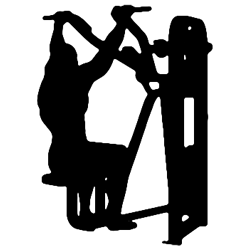
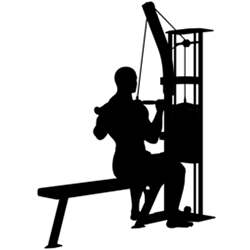
The lat pulldown trains the same pattern as a pull-up but lets you choose the weight, so it suits beginners building toward pull-ups and anyone who wants more reps than bodyweight allows. The cable version with a straight bar is the classic, and you can swap the bar for other handles to change the grip. The machine version moves on a fixed path, which feels steadier and lets you focus on the squeeze. Either works as a main back exercise; pick the one where you feel your lats more.
How to do it (Machine)
Set the thigh pads snug against your legs and sit down with your feet planted.
Grip the handles overhand with your arms extended overhead.
Pull the handles to your upper chest, driving your elbows down and back.
Let them rise slowly to a full stretch, letting your shoulder blades lift at the top. Don't let the stack drop between reps.
Set the knee pads snug against your thighs and grip the bar overhand slightly wider than shoulder-width.
Sit down with your feet flat and your arms extended overhead.
Pull the bar to your upper chest, drawing your shoulder blades down and back.
Let it rise slowly to a full stretch. A small backward lean is fine, but keep your torso still rather than rowing the bar down with your whole body.
Common mistakes
Leaning way back
A small lean is fine, but rocking your torso back to drag the bar down turns it into a row with momentum. Keep your torso still once you're set.
Pulling the bar behind your neck
Pulling behind your head forces your head forward and shortens the pull. Bring the bar to your upper chest instead.
Skipping the stretch at the top
Let the bar rise until your arms are straight and your shoulder blades lift, without letting the stack touch down. Stopping early halves the range.
Leaving the thigh pads loose
If the pads don't hold your legs, you'll lift off the seat as the weight gets heavy. Set them snug against your thighs before the first rep.
Sets, reps and progression
How many sets you do and how close to failure you take them depend on your goal and your week, not on the exercise. These guides cover it:
Alternatives that train the same thing
Same movement, a different angle or piece of equipment.