Band-Assisted Chin Up
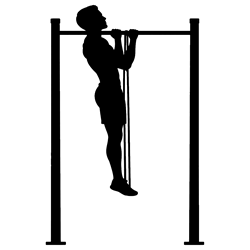
A chin-up with a resistance band looped over the bar under your knee or foot: the band gives you a boost while you pull with an underhand grip, mainly working your lats and biceps.
- Primary muscles
- Lats, Biceps
- Secondary
- Upper back, Forearm flexors
- Difficulty
- Beginner
- Logged as
- Assistance × reps
Loads from YouTube only when you press play. The video is by an independent creator.
Why do it
This gets you practicing the real chin-up on a bar while bodyweight reps aren't there yet. The band helps most at the bottom, where you start, and very little at the top, so you finish each rep almost on your own. That's the main difference from the assisted machine, which helps evenly. The underhand grip brings your biceps in, so most people find it a little easier than the overhand band-assisted pull-up. Move to lighter bands until you can do clean reps without one.
How to do it
Loop a band over the bar and place one knee or foot in the bottom of the loop. Grab the bar with an underhand grip about shoulder-width apart.
Hang with straight arms and your shoulders pulled down, away from your ears. The band helps most at the bottom.
Pull yourself up until your chin is above the bar, keeping your elbows in front of your body.
Lower yourself under control until your arms are straight. Log the band you used; a lighter band counts as progress, until you can do chin ups without one.
Common mistakes
Bouncing out of the bottom
The band stores energy at the bottom and can fling you up. Pause briefly in a dead hang with your shoulders pulled down, then pull.
Stopping with your chin below the bar
The band helps least at the top, so it's tempting to quit early. Finish each rep with your chin clearly above the bar.
Swinging on the band
A band under one knee or foot can set your body swaying. Keep your core tight and your legs still so you rise straight up.
Staying on the same band too long
Once you hit your target reps, switch to a lighter band. Otherwise the band keeps doing work your back and arms could be doing.
Sets, reps and progression
How many sets you do and how close to failure you take them depend on your goal and your week, not on the exercise. These guides cover it:
Alternatives that train the same thing
Same movement, a different angle or piece of equipment.