Band Lat Pulldown
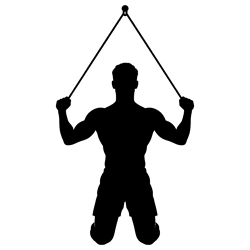
A pulldown with a resistance band anchored overhead: kneeling or sitting below it, you pull your elbows down to your ribs, mainly working your lats.
- Primary muscles
- Lats
- Secondary
- Upper back, Biceps, Forearm flexors
- Difficulty
- Beginner
- Logged as
- Band × reps
Loads from YouTube only when you press play. The video is by an independent creator.
Why do it
It's the home version of the cable pulldown, handy when you have no machine and can't do pull-ups yet. Bands get harder as they stretch, so the bottom of the pull is the toughest part and the top, where your lats are stretched, is light. That makes it a good warm-up or high-rep finisher, while a cable or machine pulldown suits heavy work better. Progress with a stronger band, or set up further from the anchor so the band starts with more tension.
How to do it
Anchor a band overhead, for example over a door or a pull-up bar, and kneel or sit below it holding one end in each hand with your arms straight.
Pull your elbows down and back toward your ribs until your hands are at shoulder height.
Keep your torso upright and your shoulders down, away from your ears.
Return slowly until your arms are straight again. Log the band you used; a stronger band counts as progress.
Common mistakes
Leaning back to finish the rep
When the band gets tight, it's tempting to rock your torso back. Stay upright and let your elbows do the pulling.
Letting the band snap back up
The band will yank your arms up if you let it. Control the return until your arms are straight, since that's where your lats stretch.
Shrugging your shoulders
Keep your shoulders down, away from your ears. Shrugging moves the work into your neck and upper traps instead of your lats.
Starting with a slack band
If the band is loose with your arms straight, the first part of each rep does nothing. Move away from the anchor until there's light tension at the top.
Sets, reps and progression
How many sets you do and how close to failure you take them depend on your goal and your week, not on the exercise. These guides cover it:
Alternatives that train the same thing
Same movement, a different angle or piece of equipment.