Band Squat
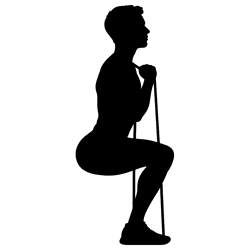
A squat against a resistance band: standing on the band with the ends held at your shoulders, you squat down and drive back up, working your quads and glutes.
- Primary muscles
- Quads, Glutes
- Secondary
- Adductors
- Difficulty
- Beginner
- Logged as
- Band × reps
Loads from YouTube only when you press play. The video is by an independent creator.
Why do it
Bands are light, cheap and travel well, which makes the band squat a handy option for home workouts, warm-ups and beginners. The band is slackest at the bottom and tightest at the top, so the hard part is standing tall, the opposite of a barbell squat. That makes it a decent introduction to squatting, but you'll need thicker bands, or more of them, to keep progressing. Note which band you used so you can track it.
How to do it
Stand on the middle of a band with your feet shoulder-width apart and hold one end in each hand at your shoulders, palms facing forward.
Push your hips back and bend your knees to squat as deep as you can with a flat back, knees following your toes.
Drive through your whole foot to stand up straight.
Keep your chest up and your hands at your shoulders throughout. Log the band you used; a stronger band counts as progress.
Common mistakes
Letting your hands drift forward
When the band pulls hard at the top, your hands tend to move in front of your chest and tip you forward. Keep your hands fixed at your shoulders, elbows under your wrists.
Stopping short of standing tall
The top is where the band fights hardest, so it's tempting to stop a little early. Finish every rep with your hips and knees fully extended.
Band under the balls of your feet
A band placed near your toes can slip off or roll. Put it under the middle of your feet and press your whole foot down.
Squatting shallow
The band is barely working at the bottom, so depth costs you little. Squat as deep as you can with a flat back and your heels down.
Sets, reps and progression
How many sets you do and how close to failure you take them depend on your goal and your week, not on the exercise. These guides cover it:
Alternatives that train the same thing
Same movement, a different angle or piece of equipment.