Banded Glute Bridge
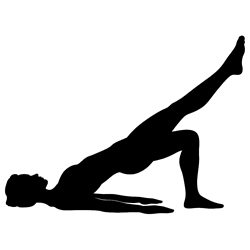
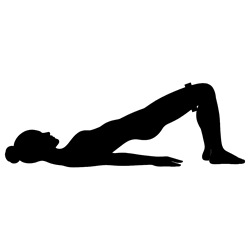
Lying on your back with a loop band just above your knees, you press your knees out against it and lift your hips, working your glutes and the outer hip together.
- Primary muscles
- Glutes
- Secondary
- Hamstrings, Abductors
- Difficulty
- Beginner
- Logged as
- Band × reps
Loads from YouTube only when you press play. The video is by an independent creator.
Why do it
Adding a band to the glute bridge gives you two jobs at once: extending your hips and holding your knees apart. That brings in the side of your hips, which makes it a popular warm-up before squats and hip thrusts and a simple move for home workouts. It suits beginners and anyone whose knees drift inward when they bridge. The load stays modest, so for heavy glute work move on to a weighted bridge or hip thrust; here, a stronger band is how you progress.
How to do it
Lie on your back with a loop band just above your knees, feet flat on the floor about hip-width apart and arms at your sides.
Press your knees slightly outward against the band and lift your hips until your body forms a straight line from shoulders to knees.
Squeeze your glutes at the top for a moment without arching your lower back.
Lower your hips slowly. Log the band you used; a stronger band counts as progress.
Common mistakes
Letting your knees cave inward
When the band wins and your knees fall in, the outer hip stops working. Keep steady outward pressure from the first rep to the last.
Pushing your knees too wide
Forcing your knees far apart shortens the bridge and turns it into a band exercise. Press out just enough to keep your knees in line with your feet.
Placing the band too low
A band on your shins or right on the kneecaps rolls and changes the tension. Set it just above your knees, on the thighs, before you lie down.
Skipping the pause at the top
Without a pause, you miss the point where the band and your glutes both work hardest. Hold each rep for a moment before lowering.
Sets, reps and progression
How many sets you do and how close to failure you take them depend on your goal and your week, not on the exercise. These guides cover it:
Alternatives that train the same thing
Same movement, a different angle or piece of equipment.