Glute Kickback
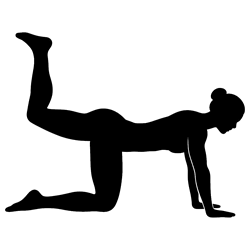
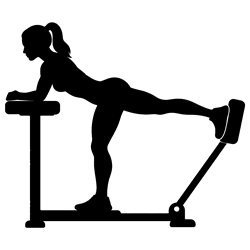
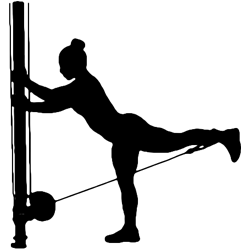
Braced on a machine pad or standing at a cable, you push one leg back until your hip is fully extended, isolating the glute of that leg.
Equipment
- Primary muscles
- Glutes
- Secondary
- Hamstrings
- Difficulty
- Beginner
- Logged as
- Weight × reps
- Primary muscles
- Glutes
- Difficulty
- Beginner
- Logged as
- Weight × reps
Loads from YouTube only when you press play. The video is by an independent creator.
Why do it
Kickbacks train one glute at a time with a load you can increase steadily, which makes them a popular finisher after squats or hip thrusts. The machine supports your torso, so you can focus on the hip and usually push a bit heavier. The cable version needs only an ankle strap and has you standing on one leg, so it asks for more balance and core control. Either way, the range ends where your hip is fully extended, not where your foot stops rising.
How to do it (Machine)
Set up at the kickback machine with your chest or forearms on the pad and one foot on the platform or against the lever.
Push your foot back and up until your leg is straight and your hip is fully extended.
Squeeze your glute at the top for a second.
Return slowly without letting the weight stack touch, then switch legs. Keep your lower back still; the movement should come from the hip alone.
Fasten an ankle strap to the low pulley and put it on one ankle. Face the machine and hold it for support.
Stand on your other leg with a slight bend in that knee and your core braced.
Drive the working leg back and up, squeezing your glute at the end.
Return slowly under control. Stop before your lower back starts to arch; extra range comes from the spine, not the hip.
Common mistakes
Arching your back to kick higher
Past full hip extension, any extra height comes from your lower back. Stop when your hip is open and your back hasn't moved.
Swinging the leg
Kicking fast and letting the leg swing back uses momentum. Drive back with control, pause for the squeeze and return slowly.
Letting the weight stack rest
Touching the stack down between reps gives the glute a break each time. Stop just short of it and go straight into the next rep.
Turning your hip out
Rotating your foot and hip outward lets other muscles help lift. Keep your hips square to the machine and the working foot pointing straight.
Sets, reps and progression
How many sets you do and how close to failure you take them depend on your goal and your week, not on the exercise. These guides cover it:
Alternatives that train the same thing
Same movement, a different angle or piece of equipment.