Banded Lateral Walk
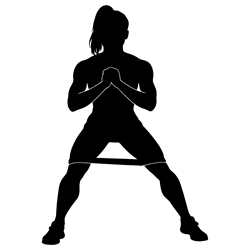
With a loop band around your knees or ankles, you take controlled sideways steps in a slight squat, keeping tension on the band to work your outer hip.
- Primary muscles
- Abductors
- Secondary
- Glutes
- Difficulty
- Beginner
- Logged as
- Band × reps
Loads from YouTube only when you press play. The video is by an independent creator.
Why do it
Lateral walks train your hip abductors, the muscles that move your leg out to the side and steady your pelvis when you stand on one leg. They're a common warm-up for squats, lunges and running and need nothing but a loop band. Moving the band from above your knees down to your ankles makes the same band harder, because the lever gets longer. Unlike lying-down abductor moves, you work on your feet, with your weight shifting over the standing leg at every step.
How to do it
Place a loop band just above your knees or around your ankles and stand with your feet hip-width apart, knees slightly bent.
Step to the side with one foot, then follow with the other, keeping tension on the band the whole time.
Keep your hips level and your toes pointing forward; do not let your knees cave in.
Take the planned number of steps in one direction, then come back. Log the band you used; a stronger band counts as progress.
Common mistakes
Letting your feet snap together
If the trailing foot slams in, the band goes slack and you lose tension. Bring it in slowly and keep your feet about hip-width apart.
Rocking your torso side to side
Swaying your upper body over each step moves the work out of your hips. Keep your chest still and your hips level.
Turning your toes out
Pointing your feet outward lets other hip muscles take over the work. Keep your toes facing forward for every step.
Standing up straight
Without the slight knee bend, it's easy to swing your legs and lose tension. Sit into a shallow squat and stay at that height.
Sets, reps and progression
How many sets you do and how close to failure you take them depend on your goal and your week, not on the exercise. These guides cover it:
Alternatives that train the same thing
Same movement, a different angle or piece of equipment.