Bayesian Curl
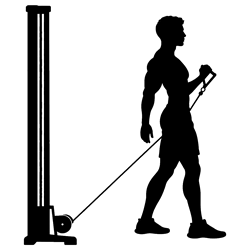
A one-arm cable curl done facing away from a low pulley: your arm starts pulled behind your body, so the biceps works from a deep stretch up to a full curl.
- Primary muscles
- Biceps
- Secondary
- Forearm flexors
- Difficulty
- Beginner
- Logged as
- Weight × reps
Loads from YouTube only when you press play. The video is by an independent creator.
Why do it
It suits anyone who wants a biceps exercise that loads the stretched position, which most free-weight curls leave light. Because the cable pulls from behind, tension is on from the very bottom of the rep, and working one arm at a time lets you fine-tune the angle. Compared with an incline dumbbell curl, it gives a similar stretch with steadier tension and no bench, but it needs a cable station and each arm trains separately.
How to do it
Attach a single handle to a low pulley, grab it with an underhand grip and step forward so your arm is pulled behind your body.
Stand in a staggered stance with your torso upright and your elbow slightly behind your hip.
Curl the handle up without letting your elbow drift forward.
Lower slowly until your arm is straight and the biceps is fully stretched. The stretched position is the whole point, so do not cut the bottom short.
Common mistakes
Letting the elbow swing forward
As you curl, the elbow wants to drift in front of your body, which removes the stretch. Keep it slightly behind your hip and move only your forearm.
Standing too close to the pulley
If your arm hangs straight down at the start, you've lost the point of the exercise. Step forward until the cable pulls your arm back behind you.
Cutting the bottom short
The stretched bottom is what sets this curl apart. Lower until your arm is straight on every rep, even if that means a lighter weight.
Hunching forward to help
Tipping your torso forward changes the cable angle and lets your shoulder take over. Stay upright in a staggered stance.
Sets, reps and progression
How many sets you do and how close to failure you take them depend on your goal and your week, not on the exercise. These guides cover it:
Alternatives that train the same thing
Same movement, a different angle or piece of equipment.