Bench Press
Lying on a flat bench, you lower a bar or dumbbells to your mid-chest and press back up, training your whole chest with help from your front delts and triceps.
Equipment
- Primary muscles
- Upper chest, Middle chest, Lower chest
- Secondary
- Front delts, Triceps
- Difficulty
- Beginner
- Logged as
- Weight × reps
- Primary muscles
- Upper chest, Middle chest, Lower chest
- Secondary
- Front delts, Triceps
- Difficulty
- Beginner
- Logged as
- Weight × reps
- Primary muscles
- Upper chest, Middle chest, Lower chest
- Secondary
- Front delts, Triceps
- Difficulty
- Beginner
- Logged as
- Weight × reps
- Primary muscles
- Upper chest, Middle chest, Lower chest
- Secondary
- Front delts, Triceps
- Difficulty
- Beginner
- Logged as
- Weight × reps
Loads from YouTube only when you press play. The video is by an independent creator.
Why do it
The bench press is the main horizontal press for building chest, shoulder and triceps strength, and the easiest to load heavy and track over time. The barbell lets you move the most weight. Dumbbells give a longer range and make each side work on its own, which helps if one arm tends to take over. The Smith machine is easy to set up alone thanks to its fixed path, and the cable version keeps tension on throughout and suits lighter, higher-rep work.
How to do it (Barbell)
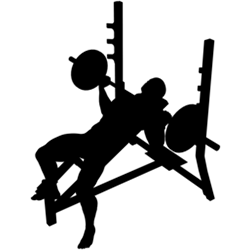
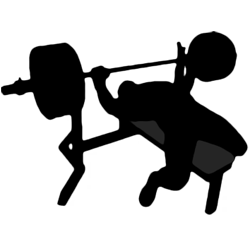
Lie on the bench with your eyes under the bar, feet planted, shoulder blades pulled back and down into the bench.
Grip the bar slightly wider than shoulder-width with your thumbs wrapped around it, then unrack it over your chest.
Lower the bar to your mid-chest with control, keeping your upper back tight.
Press it back up and slightly back, finishing over your shoulders. A small arch in your lower back is fine as long as your hips stay on the bench.
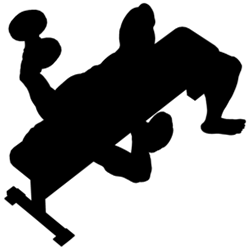
Sit on the end of a flat bench with the dumbbells on your thighs, then use your legs to kick them back as you lie down.
Hold the dumbbells at chest level with your palms facing your feet, slightly wider than shoulder width.
Press them up until your arms are nearly straight, stopping short of locking out.
Lower them to chest level under control. Dumbbells give you more range and let each side work on its own, so go lighter than your barbell weight.
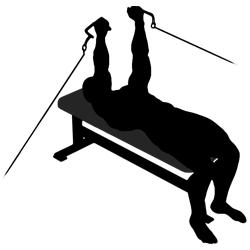
Set a flat bench between two cable stations with both pulleys at the bottom and attach a handle to each.
Lie back with your feet planted and hold the handles above your chest with your arms extended.
Lower the handles to your chest with your elbows at roughly 45 degrees to your body.
Press back up. Line the bench up so the cables pull straight along your press path rather than off at an angle.
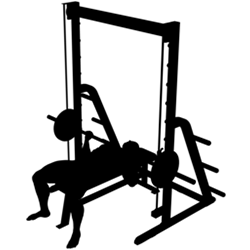
Centre the bench under the bar so the bar sits over your mid-chest when you lie down, and check the hooks are set at a height you can reach.
Grip the bar slightly wider than shoulder-width, unrack it by rotating the bar, and hold it over your chest with straight arms.
Lower the bar to your chest under control.
Press it back up until your arms are extended. The bar path is fixed, so position the bench first and adjust your body, not the bar.
Common mistakes
Bouncing the bar off your chest
Letting the bar crash and rebound off your sternum moves the weight with momentum. Lower it under control and touch lightly before you press.
Losing your shoulder blade position
If your shoulders roll forward off the bench mid-set, the press gets unstable. Pull your shoulder blades back and down before unracking and keep them there.
Lifting your hips off the bench
Driving so hard with your legs that your hips rise changes the angle and shortens the range. A small arch is fine, but keep your glutes on the bench.
Pressing straight up from the chest
From your mid-chest the bar should move up and slightly back, ending over your shoulders. Pressing straight up leaves it too far forward, where it feels heavier.
Sets, reps and progression
How many sets you do and how close to failure you take them depend on your goal and your week, not on the exercise. These guides cover it:
Alternatives that train the same thing
Same movement, a different angle or piece of equipment.