Calf Raise on the Hacksquat
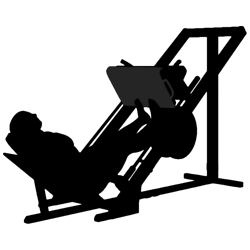
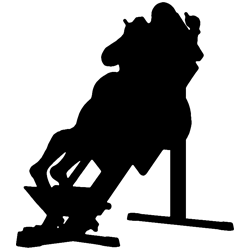
A calf raise done in a hack squat machine: back on the pad and the balls of your feet on the platform edge, you rise onto your toes with nearly straight legs, then drop your heels into a stretch.
- Primary muscles
- Calves
- Difficulty
- Beginner
- Logged as
- Weight × reps
Loads from YouTube only when you press play. The video is by an independent creator.
Why do it
It's a handy option when the standing calf machine is busy or your gym doesn't have one, since the hack squat lets you load your calves heavily with your back supported. The sled runs on a fixed track, so you only have to think about your ankles. With your legs almost straight it trains the whole calf, unlike seated raises, which shift the work toward the soleus. Compared with leg press calf raises, you're standing in the sled with the load on your shoulders rather than seated pushing a platform.
How to do it
Get into the hack squat machine with your back on the pad and your shoulders under the pads.
Place the balls of your feet on the edge of the platform, hip-width apart, heels hanging off.
Release the safety locks and straighten your legs, keeping a slight bend in your knees.
Push up onto your toes as high as you can, then lower your heels below the platform for a full stretch. Keep your knees still throughout.
Common mistakes
Bending the knees to move the sled
Letting your knees bend and straighten turns it into a mini squat. Set a slight bend and keep it there, so only your ankles move.
Whole foot on the platform
With your full foot on the platform, your heels can't drop and the stretch is gone. Place only the balls of your feet on the edge.
Bouncing out of the bottom
A stretched calf acts like a spring, and bouncing lets it do the work. Pause briefly at the bottom, then push up.
Cutting the top short
Stopping halfway up leaves the top of the range untrained. Push onto your toes as high as you can on every rep.
Sets, reps and progression
How many sets you do and how close to failure you take them depend on your goal and your week, not on the exercise. These guides cover it:
Alternatives that train the same thing
Same movement, a different angle or piece of equipment.