Close Grip Lat Pulldown
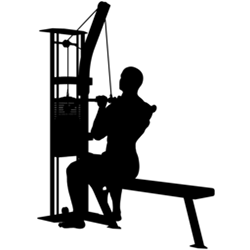
A cable pulldown with a straight bar held overhand, hands close together: you pull the bar to your upper chest, mainly training your lats through a long range.
- Primary muscles
- Lats
- Secondary
- Upper back, Biceps, Forearm flexors
- Difficulty
- Beginner
- Logged as
- Weight × reps
Loads from YouTube only when you press play. The video is by an independent creator.
Why do it
Bringing your hands close together lets your elbows travel further down and back than with a wide grip, so you get a longer range at the bottom. It's a good option if wide pulldowns feel cramped in your shoulders, or if you want your biceps to help a bit more on the same machine. Unlike a V-bar handle, the straight bar keeps your palms facing away. Use it as a main back exercise or as a second pulldown next to a wider grip.
How to do it
Attach a straight bar to the high pulley and set the thigh pad snug against your legs.
Sit down, grip the bar overhand with your hands close together and your arms extended.
Pull the bar to your upper chest, driving your elbows down and back and keeping your chest up.
Let it rise slowly to a full stretch. The close grip gives a longer range at the bottom than a wide grip does.
Common mistakes
Leaning far back
Swinging your torso back to get the bar down turns it into a row. Stay nearly upright with your chest up, and pull with your elbows.
Stopping the bar at your chin
The close grip lets you pull further than a wide one. Bring the bar all the way to your upper chest so you use that extra range.
Letting the bar shoot up
Return slowly to a full stretch. A fast return skips the part of the rep where your lats are working at their longest.
Hunching over the bar
Rounding your upper back pulls your shoulders forward. Keep your chest up so your shoulder blades can move down and back.
Sets, reps and progression
How many sets you do and how close to failure you take them depend on your goal and your week, not on the exercise. These guides cover it:
Alternatives that train the same thing
Same movement, a different angle or piece of equipment.