Close Grip Pull Up
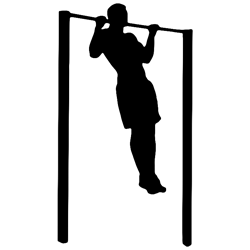
A pull-up with an overhand grip narrower than your shoulders: from a full hang, you pull with your elbows close to your body until your chin passes the bar, mainly using your lats.
- Primary muscles
- Lats
- Secondary
- Upper back, Biceps, Forearm flexors
- Difficulty
- Intermediate
- Logged as
- Reps
Loads from YouTube only when you press play. The video is by an independent creator.
Why do it
The narrow grip gives your elbows more room to travel, so the range is longer than a standard pull-up and your biceps help a bit more. It's a useful variation if wide grips feel cramped in your shoulders, or if you want something between a regular pull-up and a chin-up while keeping your palms facing away. Start every rep by pulling your shoulder blades down, so your arms don't begin the pull on their own.
How to do it
Grip the bar overhand with your hands closer than shoulder-width and hang with your arms straight.
Pull your shoulder blades down before you start pulling.
Pull yourself up with your elbows close to your body until your chin passes the bar.
Lower under control to a full hang. The narrow grip gives a longer range than a wide one and brings the biceps in more.
Common mistakes
Pulling before setting your shoulders
Bending your elbows while your shoulders are still up by your ears makes your arms do the first part alone. Pull your shoulder blades down first, then pull.
Jamming your hands together
Hands touching make the top of the rep cramped and awkward on the wrists. Keep them a little narrower than your shoulders, not pressed together.
Letting your elbows flare
The narrow grip works with your elbows close to your body. Letting them flare out shortens the range you chose this grip for.
Cutting the bottom short
The longer range is the point of this variation. Lower to a full hang every rep instead of bouncing from bent arms.
Sets, reps and progression
How many sets you do and how close to failure you take them depend on your goal and your week, not on the exercise. These guides cover it:
Alternatives that train the same thing
Same movement, a different angle or piece of equipment.