Cossack Squat
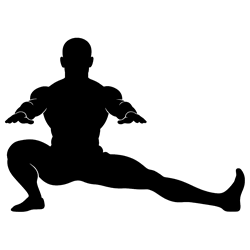
A deep side-to-side squat from a very wide stance: you sink over one bent leg while the other stays straight with the toes up, working your quads, glutes and inner thighs.
- Primary muscles
- Quads, Glutes, Adductors
- Secondary
- Hamstrings
- Difficulty
- Intermediate
- Logged as
- Reps
Loads from YouTube only when you press play. The video is by an independent creator.
Why do it
The Cossack squat trains your legs in the side-to-side direction most programs skip, and it doubles as a mobility drill for your hips, adductors and ankles. It suits anyone who wants more hip mobility, plus athletes in sports with lots of lateral movement. It's deeper and more demanding than a lateral lunge because you sit all the way down over the bent leg. Hold onto something, or hold a light weight in front as a counterbalance, until you can sink deep with your heel down.
How to do it
Stand with a very wide stance and your toes pointing slightly out.
Shift your weight to one side and squat down over that leg as deep as you can, letting the other leg straighten with the toes pointing up.
Keep your chest up and the heel of the bent leg flat on the floor.
Push back up to the middle and repeat on the other side. Hold onto something or hold a light weight in front for counterbalance if you cannot get deep yet.
Common mistakes
Lifting the heel of the bent leg
Rising onto your toes means your ankle or hip ran out of range. Only go as deep as you can with the heel flat, or hold a counterweight in front.
Rounding forward at the bottom
Collapsing your chest over your knee makes the squat look deeper than it is. Keep your chest up and sink your hips straight down over the bent leg.
Stance too narrow
Without a very wide stance there's no room to sit down over one leg. Widen your feet until the straight leg can stay straight at the bottom.
Bent knee collapsing inward
As you sink, the bent knee tends to drift inward. Push it out so it stays in line with your toes.
Sets, reps and progression
How many sets you do and how close to failure you take them depend on your goal and your week, not on the exercise. These guides cover it:
Alternatives that train the same thing
Same movement, a different angle or piece of equipment.