Elevated Pike Push Up
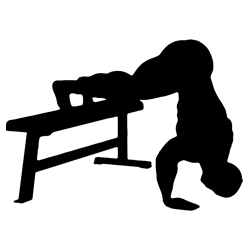
A pike push-up with your feet up on a box: with your hips stacked over your shoulders, you lower the top of your head toward the floor and press back up, training the front delts.
- Primary muscles
- Front delts
- Secondary
- Triceps, Serratus
- Difficulty
- Intermediate
- Logged as
- Reps
Loads from YouTube only when you press play. The video is by an independent creator.
Why do it
It sits between the floor pike push-up and the handstand push-up, so it's the natural next step when regular pike push-ups get easy. Raising your feet puts more of your bodyweight on your hands and makes the press more vertical, which shifts more of the work onto your shoulders. You scale it by box height and only need a sturdy box or bench, so it's a solid home option for overhead strength without weights.
How to do it
Put your feet on a stable box or bench and your hands on the floor shoulder-width apart.
Walk your hands back until your hips are stacked over your shoulders and your torso is close to vertical.
Bend your elbows to lower the top of your head toward the floor, keeping your elbows pointing back.
Press back up to straight arms. The higher your feet, the closer this gets to a handstand push-up.
Common mistakes
Hips not over your shoulders
If your hands stay too far from the box, your body angles out and it becomes a decline push-up. Walk your hands back until your hips stack over your shoulders.
Elbows flaring wide
Flared elbows make the bottom position weaker and harder to press out of. Keep them pointing back, as the steps say.
Stopping halfway down
Short reps leave out the hardest part. Lower until your head nearly touches the floor, or use a lower box until you can.
Using a box that moves
A box or bench that slides or tips when you push can turn a hard set into a fall. Use something sturdy and set it against a wall.
Sets, reps and progression
How many sets you do and how close to failure you take them depend on your goal and your week, not on the exercise. These guides cover it:
Alternatives that train the same thing
Same movement, a different angle or piece of equipment.