Standing Shoulder Press
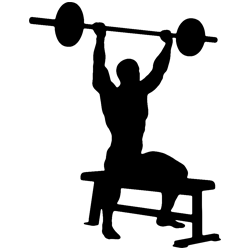
Standing with your core and glutes tight, you press a barbell, dumbbells, cable handles or a kettlebell from your shoulders to overhead, training the front delts and triceps.
Equipment
- Primary muscles
- Front delts
- Secondary
- Triceps, Side delts, Serratus
- Difficulty
- Intermediate
- Logged as
- Weight × reps
- Primary muscles
- Front delts
- Secondary
- Triceps, Side delts, Serratus
- Difficulty
- Beginner
- Logged as
- Weight × reps
- Primary muscles
- Front delts
- Secondary
- Triceps, Side delts, Serratus
- Difficulty
- Beginner
- Logged as
- Weight × reps
- Primary muscles
- Front delts
- Secondary
- Triceps, Side delts, Serratus
- Difficulty
- Beginner
- Logged as
- Weight × reps
Loads from YouTube only when you press play. The video is by an independent creator.
Why do it
Pressing on your feet makes your trunk and hips hold everything steady, so the whole body takes part and you'll use a bit less weight than seated. The barbell version, often called the overhead or military press, loads heaviest and is easy to progress in small steps. Dumbbells and the single kettlebell let each arm work alone and show up imbalances, and the kettlebell's one-sided load makes your core resist leaning. Cables pull down and slightly back, so they're a smooth option when free weights aren't handy.
How to do it (Barbell)
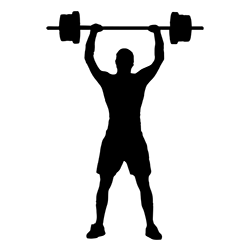
Set the bar at shoulder height in a rack, grip it overhand just outside shoulder-width, and unrack it so it rests on your front delts with your elbows slightly in front of the bar.
Step back and stand with your feet about hip-width apart, core and glutes tight.
Press the bar straight up, moving your head back slightly to let it pass, and finish with the bar over your shoulders.
Lower it back to your shoulders under control. Keep your ribs down rather than leaning back to get the bar up.
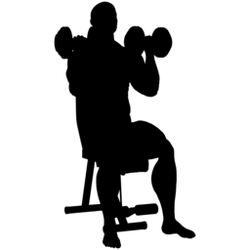
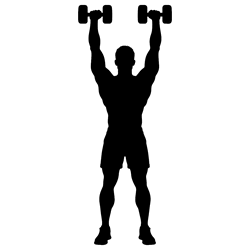
Stand with your feet hip-width apart and a dumbbell at each shoulder, palms facing forward.
Brace your core and squeeze your glutes so your lower back does not arch.
Press the dumbbells straight up until your arms are locked out overhead.
Lower them back to shoulder height under control. Standing makes your whole body work to stay stable, so use a little less weight than when seated.
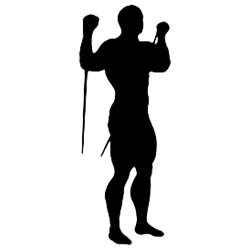
Set both pulleys to the lowest position, attach a handle to each and load the same weight on both sides.
Stand between them with a handle in each hand at shoulder height, palms forward, feet staggered and core braced.
Press the handles overhead until your arms are nearly straight.
Lower them slowly back to shoulder height. The cables pull down and slightly back, so keep your ribs down rather than leaning away from the load.
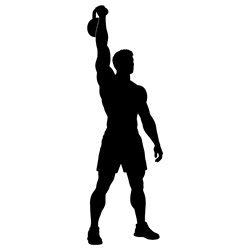
Clean a kettlebell to the rack position: handle in the base of your palm, bell resting on the back of your forearm, elbow tucked.
Brace your core and squeeze your glutes to keep your ribs down.
Press the kettlebell straight up until your arm is locked out overhead, rotating your palm forward as it rises.
Lower it back to the rack position under control. Finish all reps on one side before switching.
Common mistakes
Leaning back to finish the rep
Arching your lower back turns the press into a steep incline press. Squeeze your glutes, keep your ribs down and move your head back instead of your torso.
Pressing the bar around your face
Pushing the bar forward to clear your chin sends it out in front of you. Pull your head back slightly, press straight up, then bring your head through once it passes.
Sneaking in a knee dip
A small dip at the start turns a strict press into a push press. Keep your knees straight and your glutes tight so only your arms and shoulders move the weight.
Finishing with the weight in front
If the bar or bells end up forward of your head, your shoulders and back fight to hold them. Lock out with the weight stacked over your shoulders and feet.
Sets, reps and progression
How many sets you do and how close to failure you take them depend on your goal and your week, not on the exercise. These guides cover it:
Alternatives that train the same thing
Same movement, a different angle or piece of equipment.