Seated Shoulder Press
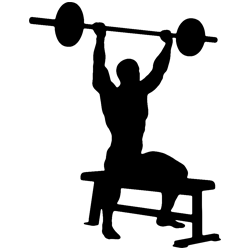
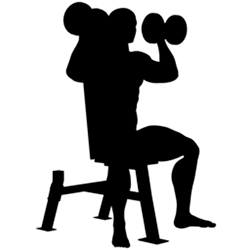
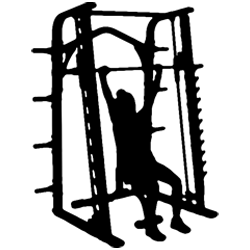
Sitting on a bench with back support, you press a barbell, dumbbells or a Smith machine bar from shoulder height to overhead, mainly training the front delts and triceps.
Equipment
- Primary muscles
- Front delts
- Secondary
- Triceps, Side delts, Serratus
- Difficulty
- Beginner
- Logged as
- Weight × reps
- Primary muscles
- Front delts
- Secondary
- Triceps, Side delts, Serratus
- Difficulty
- Beginner
- Logged as
- Weight × reps
- Primary muscles
- Front delts
- Secondary
- Triceps, Side delts, Serratus
- Difficulty
- Beginner
- Logged as
- Weight × reps
Loads from YouTube only when you press play. The video is by an independent creator.
Why do it
The back pad takes balance and leg drive out of the press, so more of the effort goes into the shoulders and triceps and you can usually load it heavier than standing. It's a solid main shoulder lift for beginners and anyone who wants to push hard without the whole body joining in. Dumbbells let each arm find its own path and expose a weaker side; the barbell is easiest to load in small steps; the Smith machine fixes the path, which helps when you train without a spotter. A slight bench incline often feels better than bolt upright.
How to do it (Barbell)
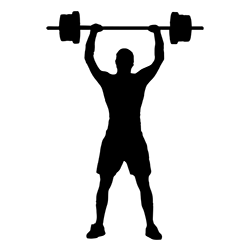
Set the bar in a rack at a height you can reach while seated on a bench with back support.
Grip it slightly wider than shoulder-width with your palms forward, unrack it and hold it at shoulder height with your elbows under the bar.
Press the bar overhead until your arms are nearly straight.
Lower it back to shoulder height under control. Brace your core and keep your ribs down so the press doesn't turn into a back arch.
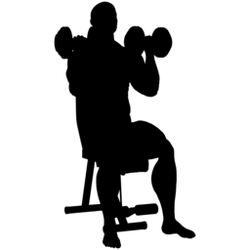
Sit on a bench with back support and hold a dumbbell in each hand at shoulder height, palms facing forward.
Set your elbows out to the sides and brace your core.
Press the dumbbells overhead until your arms are nearly straight.
Lower them slowly back to shoulder height. Keep your back on the pad instead of arching to finish the rep.
Set an upright or slightly inclined bench under the bar and adjust the bar to just above shoulder height when seated.
Sit with your back against the pad, feet planted, and grip the bar slightly wider than shoulder-width, palms forward. Unrack by rotating the bar.
Lower it to chin level with your elbows slightly forward rather than flared straight out.
Press back up until your arms are nearly straight. A slight incline is usually kinder to the shoulders than bolt upright.
Common mistakes
Arching off the back pad
Pushing your chest up and your lower back off the pad turns it into an incline press. Brace your core, keep your ribs down and your back on the pad.
Stopping at forehead height
Half reps that turn around above your head skip the hardest part of the press. Bring the weight down to shoulder or chin level each rep, under control.
Pressing forward instead of up
If the bar or dumbbells drift out in front of your face, the press gets heavier and your back starts to arch. Press in a straight line so the weight ends over your shoulders.
Racking the bar too high
Unracking a barbell from above your reach costs energy and starts the set off balance. Set the hooks so you can lift it off with bent arms while seated.
Sets, reps and progression
How many sets you do and how close to failure you take them depend on your goal and your week, not on the exercise. These guides cover it:
Alternatives that train the same thing
Same movement, a different angle or piece of equipment.