Pike Push Up
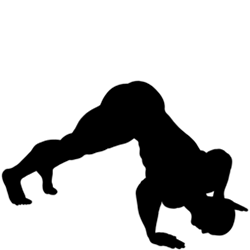
From an upside-down V with your hips high, you bend your elbows to lower the top of your head toward the floor and press back up, working your front delts and triceps with no equipment.
- Primary muscles
- Front delts
- Secondary
- Triceps
- Difficulty
- Intermediate
- Logged as
- Reps
Loads from YouTube only when you press play. The video is by an independent creator.
Why do it
It's the go-to vertical press when you have no weights, and a stepping stone toward handstand push-ups. Because your body is folded, only part of your weight goes through your hands, so it's far easier than a handstand version but loads the shoulders much more than a regular push-up. Walk your feet closer to your hands, or raise them on a box, and your torso gets more vertical, which moves it closer to pressing your full bodyweight overhead.
How to do it
Start in a push-up position, then walk your feet in and lift your hips until your body forms an upside-down V.
Keep your legs and arms straight with your head between your arms.
Bend your elbows to lower the top of your head toward the floor.
Press back up to straight arms without dropping your hips. The more vertical your torso, the closer this gets to a handstand push-up.
Common mistakes
Letting your hips drop
As you tire, the hips sink and it turns into a sloppy regular push-up. Keep your hips high so your torso stays steep and the shoulders do the work.
Leading with your nose or chin
Aim the top of your head at the floor slightly in front of your hands, so your head and hands form a triangle. Dipping your face shortens the range.
Flaring your elbows straight out
Elbows pointing out to the sides tend to cut the press short. Let them angle slightly back toward your feet as you lower.
Stopping halfway down
Partial reps feel productive but leave most of the press untrained. Lower until your head is close to the floor, even if that means fewer reps.
Sets, reps and progression
How many sets you do and how close to failure you take them depend on your goal and your week, not on the exercise. These guides cover it:
Alternatives that train the same thing
Same movement, a different angle or piece of equipment.