Forward Lunge
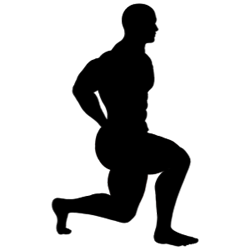
A lunge where you step forward into a split stance, lower until your back knee nearly touches the floor, then push off the front foot back to where you started.
Equipment
- Primary muscles
- Quads, Glutes
- Secondary
- Hamstrings, Lower back, Adductors
- Difficulty
- Intermediate
- Logged as
- Weight × reps
- Primary muscles
- Quads, Glutes
- Secondary
- Hamstrings, Adductors
- Difficulty
- Beginner
- Logged as
- Weight × reps
- Primary muscles
- Quads, Glutes
- Secondary
- Hamstrings, Adductors
- Difficulty
- Beginner
- Logged as
- Weight × reps
- Primary muscles
- Quads, Glutes
- Secondary
- Hamstrings, Adductors
- Difficulty
- Beginner
- Logged as
- Weight × reps
- Primary muscles
- Quads, Glutes
- Secondary
- Hamstrings, Adductors
- Difficulty
- Beginner
- Logged as
- Reps
Loads from YouTube only when you press play. The video is by an independent creator.
Why do it
Stepping forward means your front leg has to brake your body as it lands, which makes the forward lunge harder to balance and usually more demanding on your quads than stepping back. It trains one leg at a time and suits nearly any level. Bodyweight or a kettlebell at your chest is the easy start, dumbbells let you load more, a barbell demands an upright torso, and the Smith machine version is done in place, one leg at a time.
How to do it (Barbell)
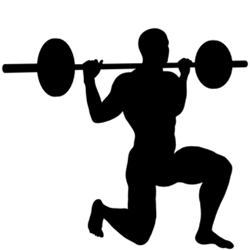
Rack a barbell across your upper back, grip it either side of your shoulders with your elbows under the bar, and stand with your feet hip-width apart.
Step forward far enough that your front shin stays close to vertical at the bottom.
Lower until your back knee is just above the floor and your front thigh is about parallel.
Push through your front foot to step back to the start, then repeat with the other leg. Keep your torso upright; the bar on your back punishes any forward lean.
Stand with your feet hip-width apart, a dumbbell in each hand at your sides.
Step forward and lower until your front thigh is about parallel to the floor and your back knee is just above it.
Push off your front foot to step back to the start.
Alternate legs each rep. Keep your torso upright and let your front knee travel forward naturally as you descend.
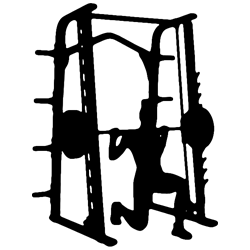
Set the bar at shoulder height, step under it so it sits on your upper back, and unrack by rotating the bar.
Step one foot forward about two feet, front foot flat and rear heel lifted.
Bend both knees to lower straight down until your rear knee is just above the floor and your front thigh is about parallel.
Push through your front foot to stand back up. Do all reps on one leg before switching. Because the bar path is fixed, set your foot position before you unrack.
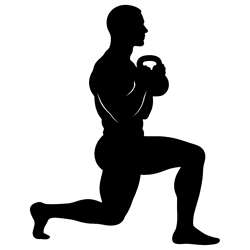
Stand tall holding a kettlebell at your chest with both hands.
Step one foot forward and lower until your front thigh is about parallel to the floor and your back knee hovers just above it.
Keep your torso upright and your front knee over your midfoot.
Push off the front heel to step back to the start, then switch legs.
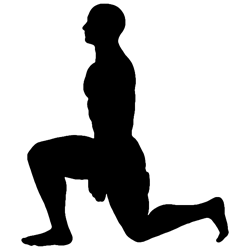
Stand upright with your feet together and your core braced.
Step forward and bend both knees until your back knee is just above the floor.
Push off your front foot to return to standing.
Alternate legs each rep, staying upright through your torso. A longer step puts more work on the glutes, a shorter one on the quads.
Common mistakes
Taking too short a step
A cramped step lifts your front heel and makes it hard to push back. Step far enough that your front foot stays flat and you can lower straight down.
Landing on your toes
A front foot that lands heel-up throws off your balance and weakens the push back. Plant your whole front foot before you lower.
Tipping forward as you land
Letting your chest drop as you step puts the load on your lower back, especially with a bar. Keep your chest up and lower straight down between your feet.
Back knee slamming the floor
Dropping hard onto your back knee means you lost control at the bottom. Stop with the knee just above the floor, then push back.
Sets, reps and progression
How many sets you do and how close to failure you take them depend on your goal and your week, not on the exercise. These guides cover it:
Alternatives that train the same thing
Same movement, a different angle or piece of equipment.