Handstand Push Up
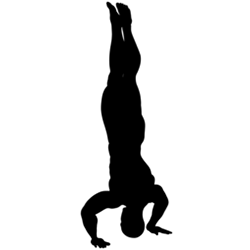
An advanced bodyweight press done upside down: in a handstand with your back to a wall, you lower until your head touches a mat and press back to straight arms.
- Primary muscles
- Front delts, Triceps
- Difficulty
- Advanced
- Logged as
- Reps
Loads from YouTube only when you press play. The video is by an independent creator.
Why do it
It's the bodyweight version of a heavy overhead press, with your whole body on your arms, so it suits calisthenics athletes who have outgrown pike push-ups. You need a steady wall handstand first, plus the shoulder and wrist strength to hold it. The wall takes care of balance so you can focus on the press; freestanding versions add balance on top. If full reps are out of reach, practice slow lowerings to the mat and partial reps onto stacked mats.
How to do it
Be comfortable holding a wall handstand before you try these. Put a folded mat under your head.
Kick up into a handstand with your back to the wall, hands about shoulder-width apart and a hand's length from it, body straight from wrists to heels.
Bend your elbows to lower until the top of your head touches the mat, keeping your elbows pointing forward rather than flaring wide.
Press back up to straight arms. Warm up your wrists and shoulders first.
Common mistakes
Elbows flaring out to the sides
Wide elbows make the bottom weaker and harder to control. Point them forward, as the steps say, roughly in line with your hands.
Arching into a banana shape
A sagging lower back moves the press off your shoulders. Squeeze your glutes and keep your body straight from wrists to heels.
Hands too far from the wall
Placing your hands far out forces a big arch. Keep them about a hand's length from the wall.
Dropping onto your head
Collapsing through the last part of the descent lands your head hard on the mat. Lower under control and touch it lightly.
Sets, reps and progression
How many sets you do and how close to failure you take them depend on your goal and your week, not on the exercise. These guides cover it:
Alternatives that train the same thing
Same movement, a different angle or piece of equipment.